Table of Contents
An Invitation Into the First Pages of a Sketchbook
Beginning a sketchbook is often the most thrilling moment in an artist’s journey. The first marks, the early experiments, the tentative lines—each becomes part of a visual archive that reveals curiosity, exploration, and the earliest signs of personal style. When considering sketch ideas for beginners, the focus is less on technical mastery and more on discovering what sparks interest, what feels natural in the hand, and what encourages the artist to return to the page again and again.
In this curated exploration, the sketchbook becomes a gallery of possibilities. Each idea is presented not as an instruction, but as an observation of what artists often find compelling when they begin: simple forms, expressive marks, everyday objects, and scenes that invite quiet attention. These early sketches create momentum, offering a creative jump start that builds confidence and nurtures artistic identity.
Exploring Simple Subjects With Big Impact
Everyday Objects as Familiar Muses



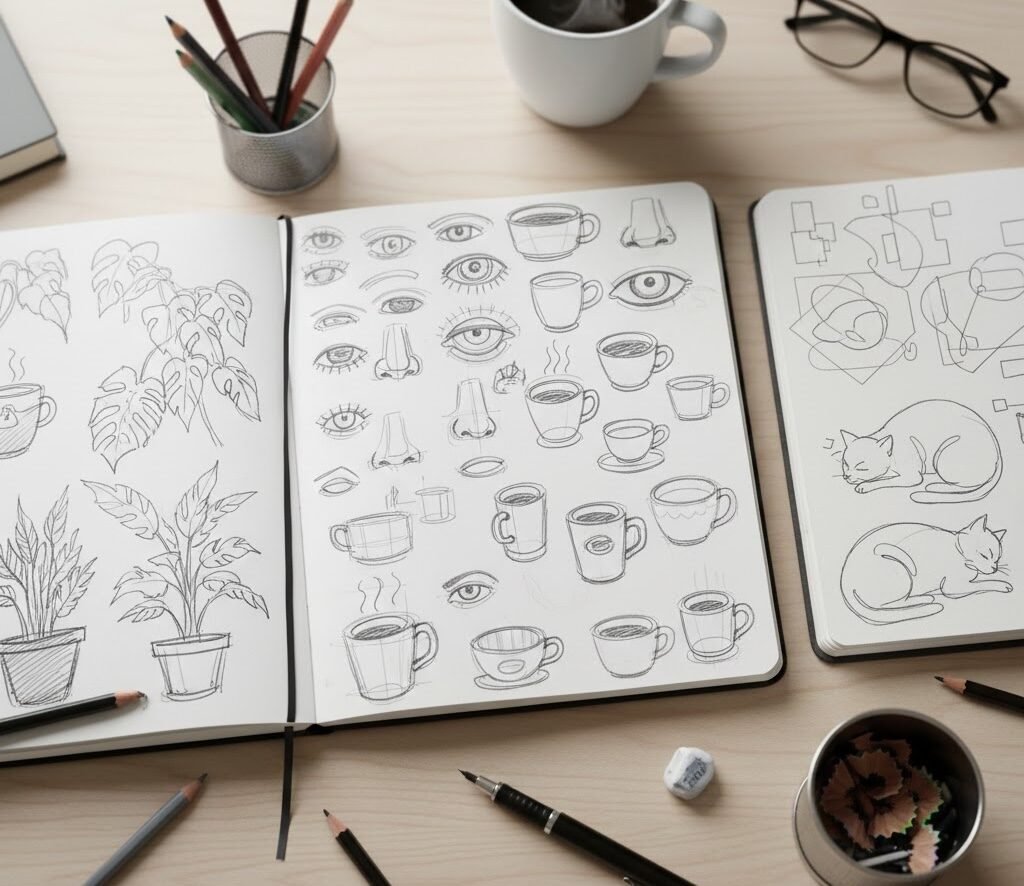
Many artists begin by turning their attention to the objects around them. A mug, a pair of glasses, a houseplant, or a favorite pen—these items often appear in early sketchbooks because they offer stability and familiarity. Notice how these subjects allow the artist to explore proportion, contour, and shading without pressure. The simplicity of the object becomes a stage for observing shape, light, and texture in a relaxed, approachable way.
Natural Forms and Organic Shapes
Leaves, stones, shells, and flowers frequently appear in beginner sketchbooks. Their irregular contours and subtle variations invite slow looking. The artist often discovers how organic forms encourage fluid lines, soft transitions, and gentle tonal shifts. These sketches reveal a growing sensitivity to nature’s patterns and the quiet rhythms of observational drawing.
Everyday Scenes and Small Moments
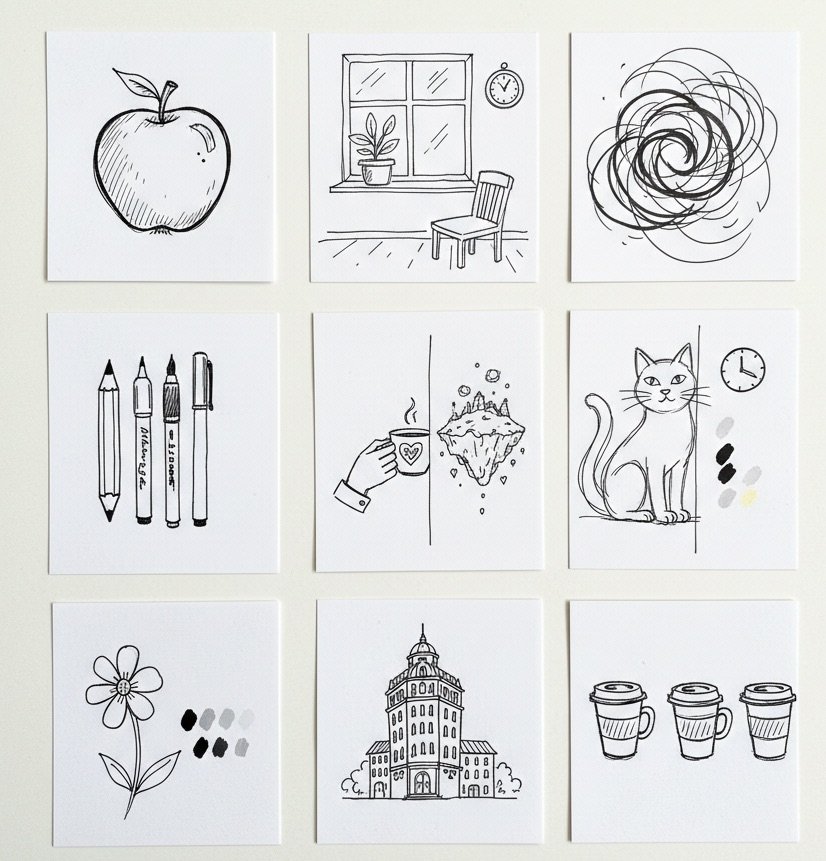
A corner of a room, a window view, or a cluster of objects on a desk can become a compelling subject. These scenes offer a sense of place and narrative. The artist begins to notice how light falls across surfaces, how shadows stretch, and how simple arrangements can feel unexpectedly poetic. These sketches often mark the moment when a beginner starts to see the world as a series of compositions waiting to be captured.
Building Confidence Through Playful Exploration
Gesture Marks and Expressive Lines
Early sketchbooks often include pages filled with loose, energetic marks. These gestures reveal an artist testing the movement of their hand, exploring rhythm, and discovering the expressive potential of line. The marks may appear abstract, yet they carry a sense of motion and emotion. This kind of exploration builds confidence and encourages a more intuitive relationship with the page.
Pattern Studies and Repeating Motifs
Beginners frequently experiment with patterns—grids, spirals, dots, waves, or geometric arrangements. These studies offer a meditative quality, allowing the artist to explore repetition, balance, and visual harmony. Over time, these motifs may evolve into personal symbols or stylistic signatures.
Silhouettes and Simple Shapes
Silhouettes of animals, objects, or figures often appear in early sketchbooks because they emphasize form without requiring detailed rendering. The artist begins to understand how shape alone can communicate identity, movement, and mood. These sketches often feel bold and graphic, offering a satisfying sense of clarity.
Observing the World Through a Beginner’s Eye
Quick Studies of People and Animals
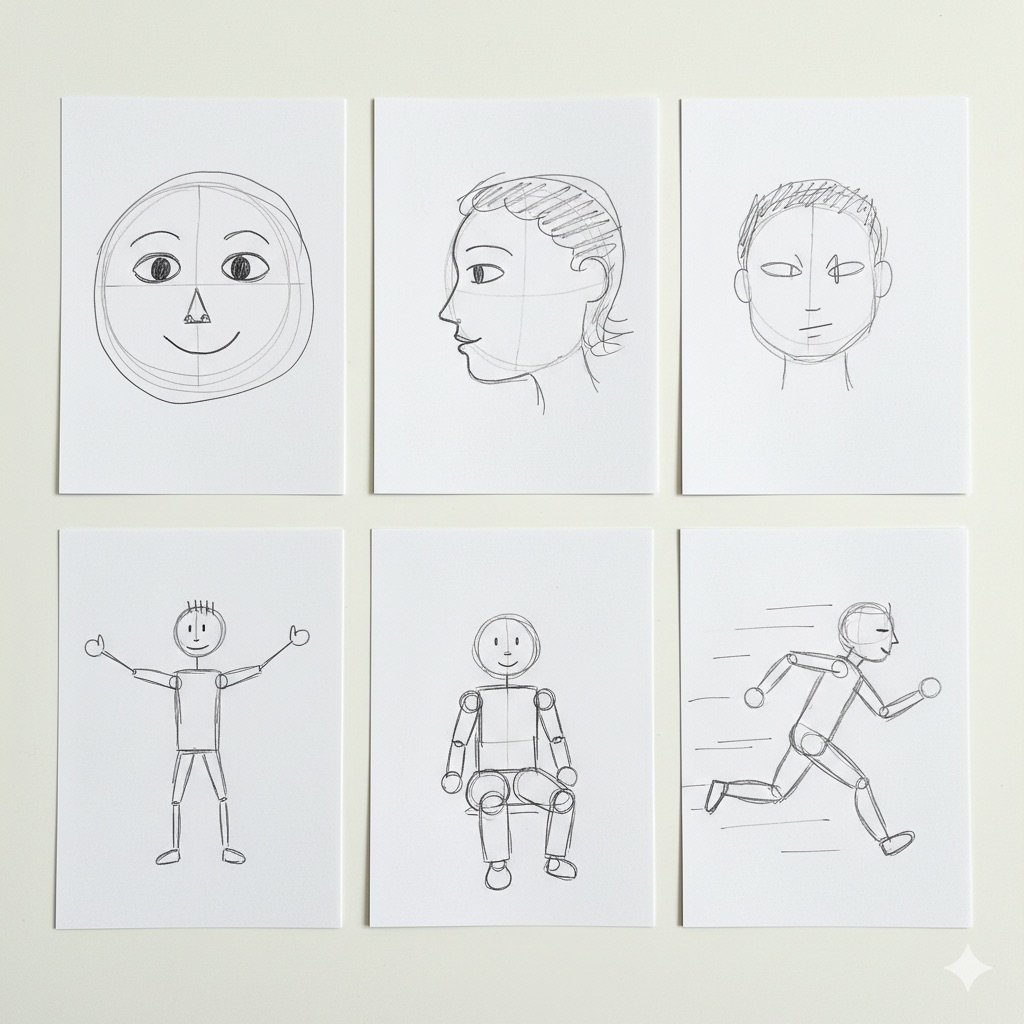
Sketchbooks often contain fleeting impressions of people—someone reading, walking, or sitting in a café. These quick studies capture posture, gesture, and personality. The artist learns to observe movement and essence rather than detail. Animals, too, become subjects of curiosity, their forms simplified into expressive shapes that reveal character.
Architectural Fragments and Urban Details
A doorway, a staircase, a streetlamp, or a row of rooftops can become compelling sketch ideas for beginners. These subjects introduce structure and perspective in a gentle way. The artist begins to notice how lines converge, how angles define space, and how architectural details create rhythm across a page.
Still Life Arrangements With Personal Meaning
Objects arranged intentionally—perhaps a favorite book, a piece of fruit, or a cherished keepsake—often appear in beginner sketchbooks. These still life sketches reveal the artist’s personal world and offer a glimpse into their interests and aesthetic preferences. The arrangement becomes a quiet narrative, a small story told through objects.
Sketch Ideas That Encourage Creative Growth
Color Swatches and Material Experiments
Many beginners devote pages to testing pencils, pens, markers, or watercolor washes. These explorations reveal how materials behave on paper—how ink flows, how pigment settles, how colors blend. The page becomes a laboratory of texture and tone, offering insight into the tools that feel most natural.
Abstract Explorations and Emotional Marks
Some sketchbook pages drift into abstraction—shapes, lines, and colors arranged intuitively. These sketches often reflect mood or energy rather than representation. They reveal the artist’s willingness to explore emotion, atmosphere, and visual language without constraints.
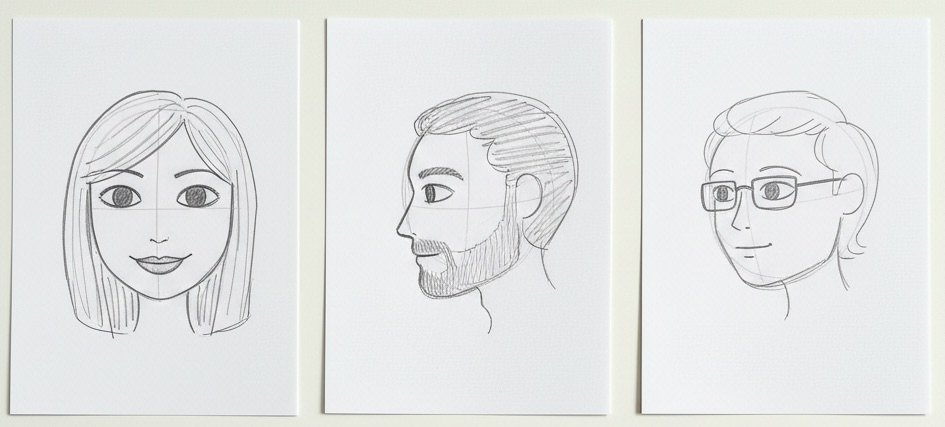
Miniature Studies and Thumbnail Sketches
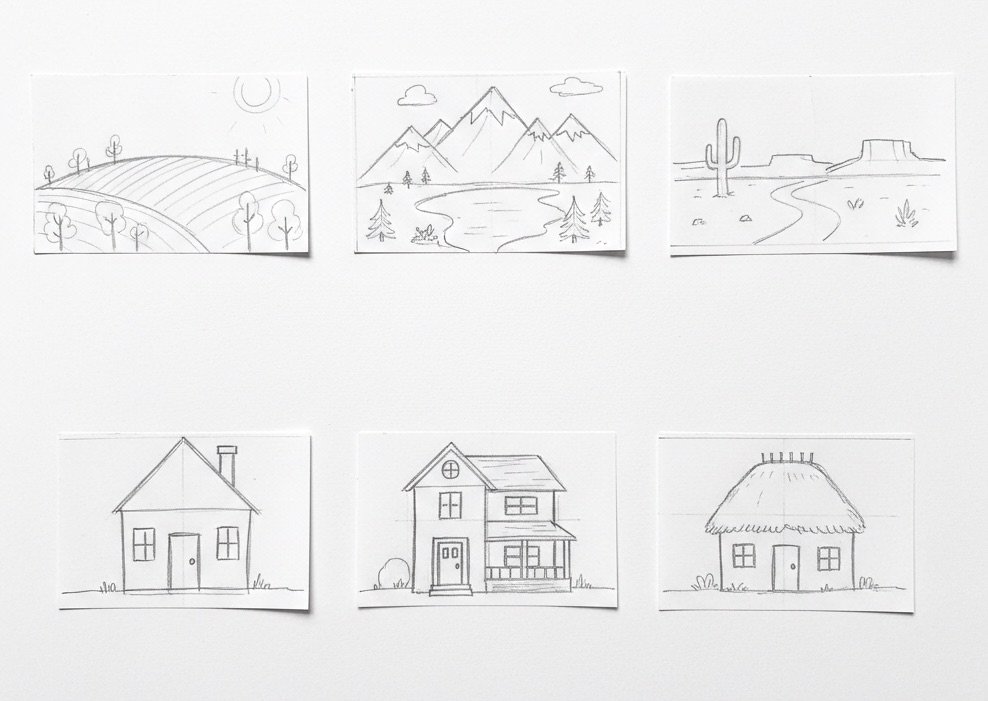
Small sketches—tiny landscapes, micro portraits, or compact compositions—often appear in beginner sketchbooks. These thumbnails allow the artist to explore ideas quickly and without pressure. They serve as seeds for future drawings and help develop a sense of composition and storytelling.

 Sketchbooks.org | INSPIRATION & SUBJECTS
Sketching at the Train Station | Capturing Movement and Architecture
Explore the poetry of transit. Discover ways to capture architecture and the motion of people in the bustling atmosphere of the station.
Frequently Asked Questions
What makes a good sketch idea for beginners?
Simple subjects that encourage observation and exploration tend to support early creative momentum.
Should beginners focus on objects or scenes?
Either can work; many artists naturally gravitate toward whatever feels familiar or visually interesting.
Are abstract sketches useful for beginners?
Yes, abstract marks help develop confidence, intuition, and a sense of personal expression.
Do beginners need special tools?
Most early sketch ideas can be explored with basic pencils, pens, or markers.
Is it better to work from life or from imagination?
Both approaches offer value, and many beginners enjoy alternating between the two.
How long should a beginner spend on a sketch?
The duration varies; some sketches emerge quickly while others invite slower observation.
Should beginners use color right away?
Color can be introduced whenever it feels natural, whether through swatches or simple accents.
Are small sketches helpful for learning?
Miniature studies allow beginners to explore ideas without pressure and often lead to larger works.
Can beginners sketch daily objects repeatedly?
Repetition builds familiarity and often reveals new details with each attempt.
Final Thoughts
Sketch ideas for beginners thrive on curiosity, openness, and the willingness to explore without expectation. A sketchbook becomes a personal gallery where simple objects, expressive marks, and everyday scenes take on new meaning. Each page reflects growth, experimentation, and the early formation of artistic identity. By observing the world with fresh eyes and embracing the freedom of early exploration, beginners create a foundation that supports a lifetime of creative discovery.
Ready to Share Your Work?
Do you believe a sketchbook should be "perfect" or raw and experimental?