Table of Contents
There’s a moment—quiet, unhurried—when your sketchbook opens and the world softens around the edges. Finding the right place for that moment is part instinct, part ritual, part gentle wandering. This guide explores the places artists return to again and again, not because they are perfect, but because they offer a particular kind of presence. Each location holds its own rhythm, its own invitation to observe, to linger, to translate the world into line and tone.
credit: thiss
The Local Park (Nature & People‑Watching)
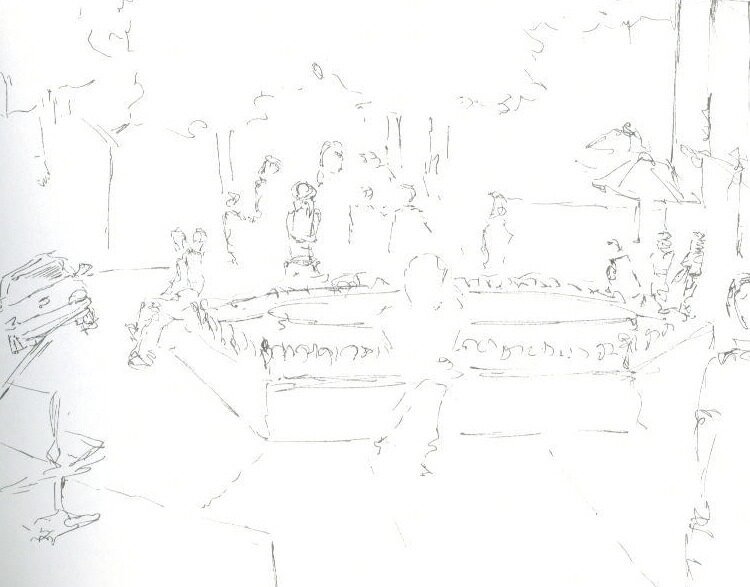
A local park is often the first place an artist learns to trust the slow unfolding of observation. Parks offer a blend of stillness and motion—trees shifting in the breeze, families passing through, dogs tugging at leashes, the occasional runner cutting a bright line across your field of view. It’s a sketching spot that rewards patience and curiosity.
The park is where your sketchbook becomes a companion rather than a tool. You sit on a bench, feel the grain of the wood beneath you, and let the environment decide the tempo. The light changes quickly here, but the stories unfold slowly. You can sketch a single tree for an hour or capture fleeting gestures of people passing by. Both are valid, both are nourishing.
Local Sports in the Park



There’s a particular electricity in sketching local sports—pickup basketball, kids’ soccer, weekend softball. The energy is raw, unpolished, and wonderfully unpredictable. You’re not trying to freeze the perfect pose; you’re catching the arc of motion, the suggestion of a sprint, the tension before a leap.
This is where gesture drawing thrives. It’s where your lines loosen, your hand warms, and your sketchbook becomes a record of movement rather than detail.
Woodlands and Forest Areas
Step deeper into the park and the world becomes quieter. Forested areas offer a different kind of sketching spot—one shaped by texture, shadow, and organic repetition. Here, the challenge is not capturing motion but capturing complexity without becoming overwhelmed.
The woods invite you to simplify. To notice the way branches braid together. To follow the rhythm of bark, leaf, and undergrowth. It’s a meditative space, ideal for artists who want to slow their breathing and sink into the page.
Your Own Garden (or Community Garden Sanctuary)
There’s a special intimacy in sketching where you live, where your hands have tended soil or where neighbors gather to grow something together. A personal garden—or a shared community garden—becomes a sketching spot shaped by familiarity. You know the way the light falls at different hours, the way certain plants lean toward the sun, the way textures shift with the seasons.
Sketching here feels like a conversation with your environment. You’re not just observing; you’re participating. The tomatoes you watered yesterday, the herbs brushing your ankles, the trellis you built last spring—they all carry your imprint. This closeness softens your lines, encourages slower looking, and invites you to notice the quiet details that strangers might miss.
Community gardens add another layer: the gentle hum of shared purpose. People tending beds, exchanging seeds, pausing to chat. It’s a place where creativity and cultivation coexist, where your sketchbook becomes part of the communal rhythm. You can capture the geometry of raised beds, the tangle of vines, or the simple poetry of hands working the earth.
Botanical Gardens (If You’re Lucky Enough to Have One Nearby)
Botanical gardens are a treasure for any sketchbook practice. They offer curated landscapes, rare species, dramatic conservatories, and carefully tended pathways that feel like stepping into a living museum. Every corner reveals a new composition—lush foliage, sculptural branches, water features, curated plant collections, and the occasional quiet bench tucked beneath a canopy.
Sketching in a botanical garden is like being given permission to wander slowly. You can follow color, texture, or form. You can sit beneath a glass dome filled with tropical humidity or linger near a desert exhibit where cacti cast sharp, elegant shadows. These spaces are designed for observation, making them ideal for artists who want to immerse themselves in botanical detail without the pressure of perfection.
Botanical gardens also attract people who move with a contemplative pace—gardeners, students, families, fellow artists. Their presence adds gentle human notes to your pages, enriching the sense of place without overwhelming it.
The Beach (Serenity, Sand, and Sea)
The beach is a sketching spot that feels like a long exhale. The horizon stretches open, the light is generous, and the soundscape becomes a soft metronome for your drawing. Sand shifts beneath you, waves repeat their ancient patterns, and the people around you move with a kind of vacation looseness.
Sketching at the beach is about atmosphere. The way sunlight glints off water. The silhouettes of distant swimmers. The geometry of umbrellas and towels. It’s a place where your lines can be airy, your compositions wide, your colors sun‑washed and gentle.

The Airport (Human Drama in Transit)
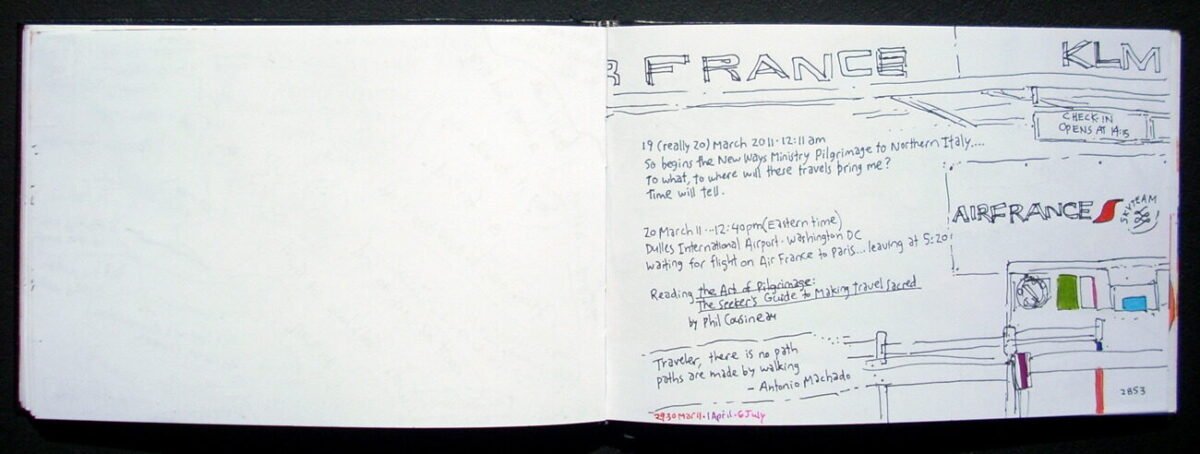
Airports are among the richest sketching spots for artists who love human stories. Every gate is a small theater: reunions, farewells, exhaustion, anticipation. People settle into their seats with books, devices, snacks, or simply their thoughts.
The architecture adds its own drama—sweeping ceilings, long corridors, glass walls that catch reflections like a second world. Sketching here feels like capturing the pulse of modern life. You’re surrounded by motion, yet anchored in your own quiet corner.
Hotel Lobby or Dining Area, Café Window to the Street
Hotel lobbies are liminal spaces—half public, half private, always in transition. They’re ideal for artists who enjoy sketching people at rest: travelers waiting for rides, guests checking in, friends sharing a meal. The lighting is often warm, the seating comfortable, and the atmosphere unhurried.
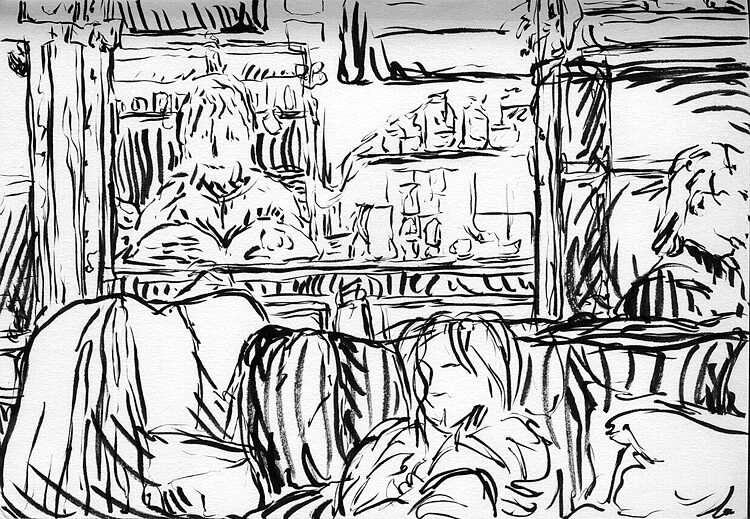
A café window offers a similar gift. You sit with a warm drink, your sketchbook open, and the street becomes your moving canvas. Pedestrians, bicycles, passing cars, shifting shadows—everything flows past in a steady stream. It’s urban sketching at its most intimate.
The Train Station (Movement and Architecture)
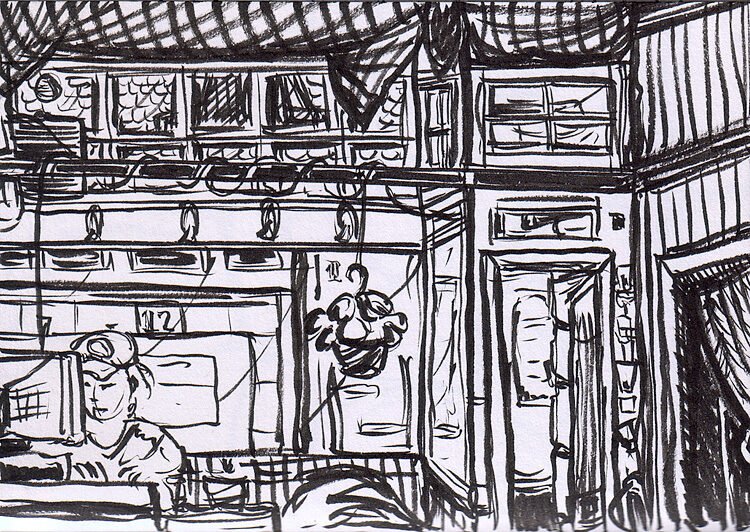
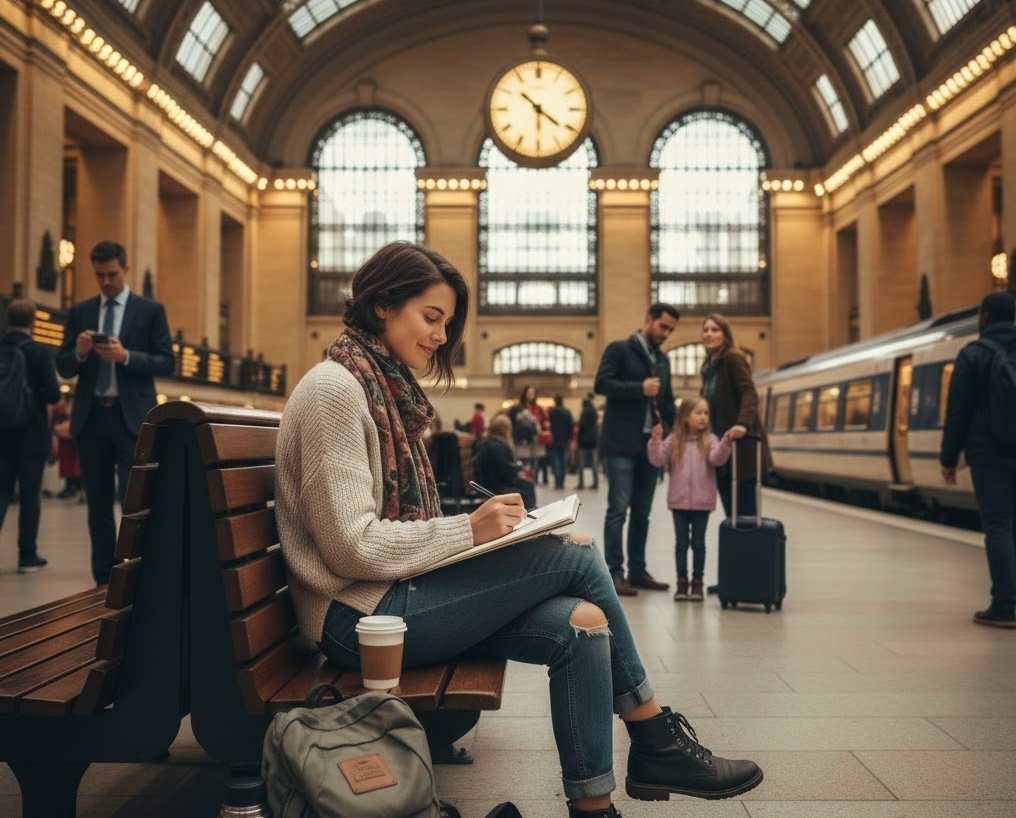
Train stations are a study in rhythm. Trains arrive and depart with mechanical certainty, while people move with their own unpredictable patterns. The architecture often leans grand or industrial, giving you strong lines, repeating structures, and dramatic vanishing points.
Grand Central Terminal, New York City & Tokyo Station, Japan are AMAZING.
Sketching here is about capturing the choreography of travel. The pause before boarding. The rush of commuters. The quiet moments between announcements. It’s a sketching spot that rewards both quick gestures and detailed architectural studies.

Bus Depot
A bus depot offers a grittier, more grounded version of the same theme. The stories here feel closer to the surface—workers on break, travelers with heavy bags, students heading home. The buses themselves create bold shapes and strong horizontals, perfect for artists who enjoy industrial forms.
The Waiting Room (Creative Focus During Idle Time)
Waiting rooms—medical offices, auto shops, government buildings—are unexpected but deeply effective sketching spots. Time slows down here. People settle into their own thoughts, often unaware of being observed.
The stillness is a gift. You can study posture, clothing folds, the quiet tension of someone reading or scrolling. It’s a place where your sketchbook becomes a refuge, turning idle time into creative time.
The Library (or Bookstore with Café)
Libraries are sanctuaries for artists who crave quiet. The soft rustle of pages, the muted footsteps, the warm pools of light—everything encourages focus. You can sketch architectural details, book stacks, or the gentle concentration of readers.
Bookstores with cafés offer a similar charm, with the added pleasure of coffee aromas and casual conversation. It’s a sketching spot that feels both cozy and creatively charged.
The Coffee & Tea Shop (The Classic Urban Nook)
The café remains a timeless sketching spot for a reason. It’s familiar, comfortable, and endlessly inspiring. People meet, work, daydream, and drift in and out. Cups clink, steam rises, and the world hums softly around you.
This is where many sketchbooks fill their pages. The café gives you permission to linger, to observe without hurry, to let your lines wander. It’s the artist’s nook, the urban hearth.
Pro Tips for Finding Your Spot
Finding the right sketching spot is often less about strategy and more about listening inward. Your mood is a compass—some days you crave the hush of a wooded trail, where the world narrows to texture and shadow; other days you want the pulse of a train station or café window, where movement keeps your lines loose and alive. Let your emotional weather guide you, and you’ll naturally land in places that support the kind of drawing you’re ready for.
Comfort is another quiet but essential part of the process. A supportive seat, a bit of shade, a manageable temperature—these small details shape how long you can stay present with your page. When your body feels at ease, your attention can settle more deeply into the scene, allowing your sketchbook to become a place of rest rather than strain.
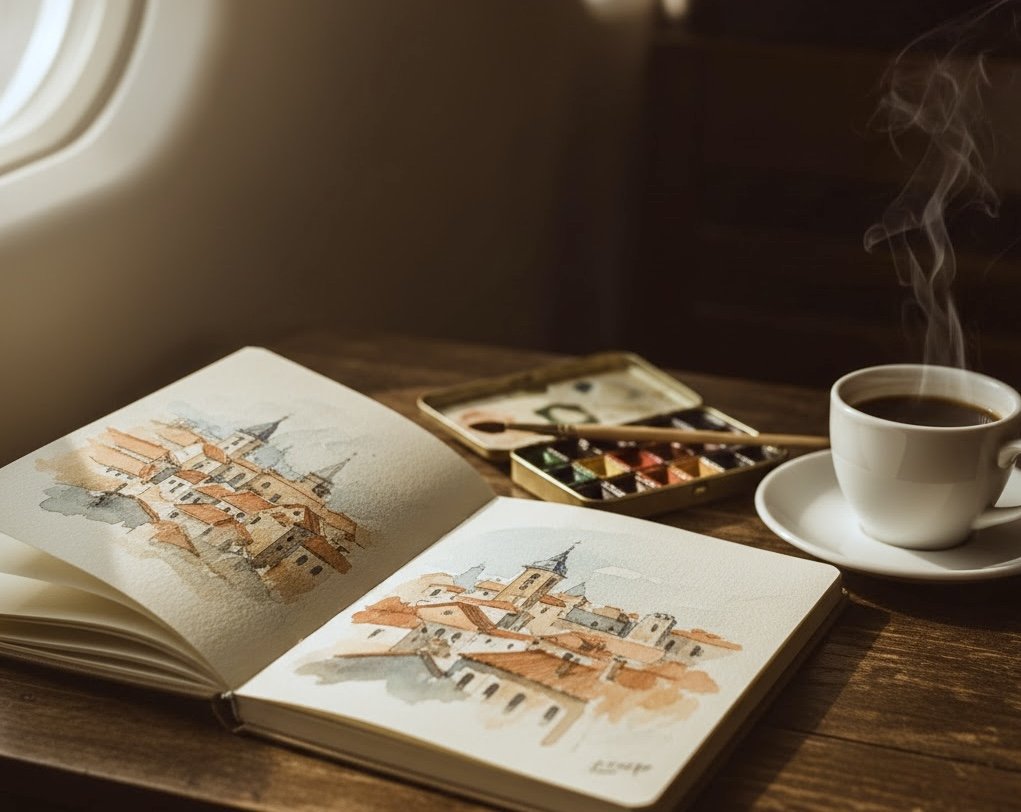
As you explore, look for scenes with layers—foreground shapes, mid‑distance activity, and a background that anchors everything together. These environments offer a richness that unfolds slowly, giving you multiple entry points for observation. A layered scene doesn’t overwhelm; it invites you to choose your focus, to wander visually, to let your drawing evolve in unexpected ways.
Flexibility is part of the artist’s rhythm. If a spot doesn’t feel right, move. There’s no rule that says you must stay where you first sit. Your sketchbook thrives on curiosity, and sometimes the best pages come from following a small instinct—a shift in light, a quieter bench, a more interesting angle. Trust that impulse.
Your energy matters, too. Some days you’re ready for the bustle of a crowded café; other days you need the gentleness of a garden or the steady calm of a library. Honor the pace your body and mind are asking for. The right sketching spot supports you rather than challenges you.
And finally, let the world come to you. The most meaningful sketching spots often appear when you’re not actively searching—an unexpected patch of sunlight, a quiet corner you’ve passed a hundred times, a moment of stillness in a place you thought was too busy. When you stay open to these small invitations, your sketchbook becomes a record not just of what you see, but of how you move through the world.
Frequently Asked Questions
How do I choose the best sketching spot for my style?
Pick a location that matches your natural pace—fast environments for gesture work, quiet ones for detail.
Is it okay to sketch people in public?
Yes, as long as you’re respectful and discreet; most people never notice, and your intent is artistic, not intrusive.
What should I bring to a sketching spot?
A simple kit—sketchbook, pencil, pen, and maybe a portable watercolor set—is usually enough.
How long should I stay in one place?
As long as it feels nourishing; some sketches take minutes, others unfold over an hour.
What if the environment changes too quickly?
Embrace it; shifting scenes encourage loose, expressive lines and stronger observational instincts.
Can I sketch indoors without feeling awkward?
Absolutely; cafés, libraries, and lobbies are full of people absorbed in their own worlds.
How do I handle unpredictable weather outdoors?
Seek partial shelter—trees, awnings, pavilions—or switch to quick studies that capture the essence rather than detail.
What if I feel self‑conscious sketching in public?
Start in quieter corners and let your confidence grow naturally; your sketchbook becomes a small, private world.
Final Thoughts
Finding your ideal sketching spot is less about geography and more about resonance. It’s the moment when your surroundings feel like collaborators—offering light, movement, texture, and story. Whether you’re tucked into a café corner, perched on a park bench, or watching travelers drift through a terminal, your sketchbook becomes a bridge between observation and expression.
The world is full of places waiting to be drawn. Let your curiosity lead, let your pages fill, and trust that every spot you choose—quiet or bustling, familiar or new—has something to teach you about seeing.
credit: sharanya
Ready to Share Your Work?
Do you see your sketchbooks as a public or private space?
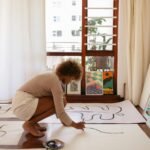
This has become my favourite part of the day. My 1 hour sketch spot.