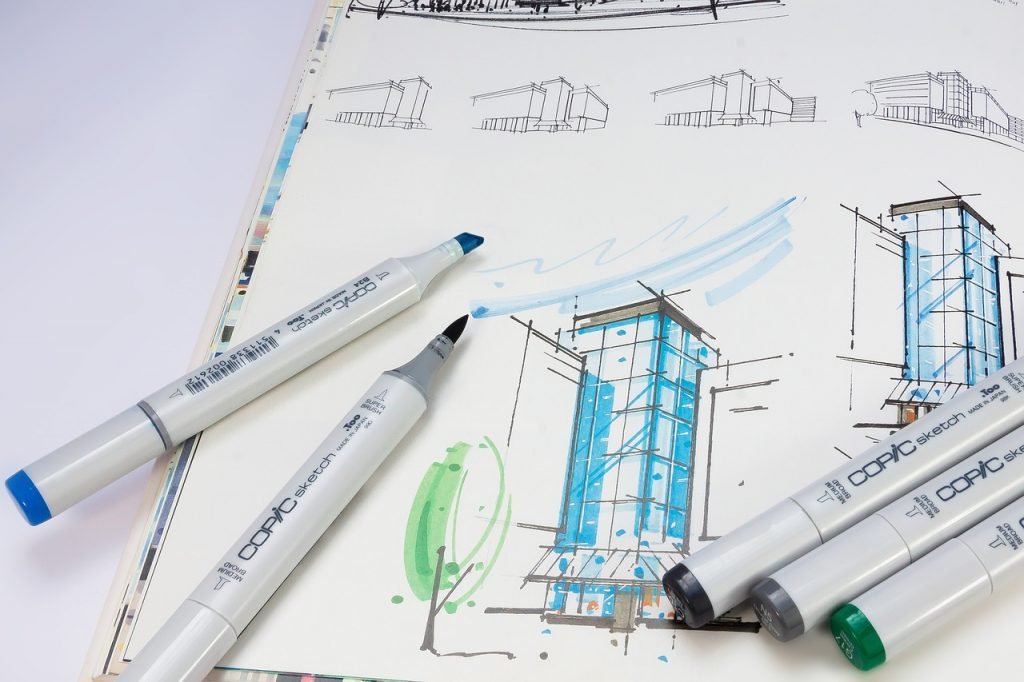
Table of Contents
A sketchbook is often seen as an artist’s companion, but anyone who works with ideas, observations, or problem‑solving knows the quiet power of a blank page. Across studios, clinics, labs, classrooms, construction sites, and digital workstations, people reach for sketchbooks to think more clearly, record what matters, and stay connected to their own creative pulse. What changes from profession to profession is not the purpose, but the flavor of the practice—the way each person uses paper, ink, graphite, or digital stylus to anchor their attention and make sense of their world.
Why So Many Professions Keep a Sketchbook
A sketchbook is more than a notebook. It’s a private studio, a testing ground, a memory device, and a place where ideas can be messy before they become polished. People in different professions use sketchbooks for different reasons, but the underlying motivation is the same: to think with their hands.
Designers use them to explore form. Scientists use them to track experiments. Medical professionals use them to understand anatomy or map procedures. Architects use them to test spatial ideas. Writers use them to shape narrative flow. Engineers use them to diagram systems. And artists—well, artists use them for everything.
The common thread is the desire to slow down long enough to see clearly. A sketchbook gives you that pause. It’s a small, portable space where you can react to the world without needing to justify or finalize anything.
Sketchbooks as Quiet Workspaces for Professional Thinking
Designers, engineers, and commercial artists often treat their sketchbooks like private studios—small, portable rooms where ideas can breathe before they’re shaped into client‑ready work. These pages hold the early sparks: loose forms, half‑finished diagrams, color notes, and the kind of visual thinking that rarely survives the jump into software. What matters here isn’t polish but presence. A sketchbook gives professionals a place to think with their hands, away from deadlines and expectations.
Artists and Illustrators: The Classic Sketchbook Keepers
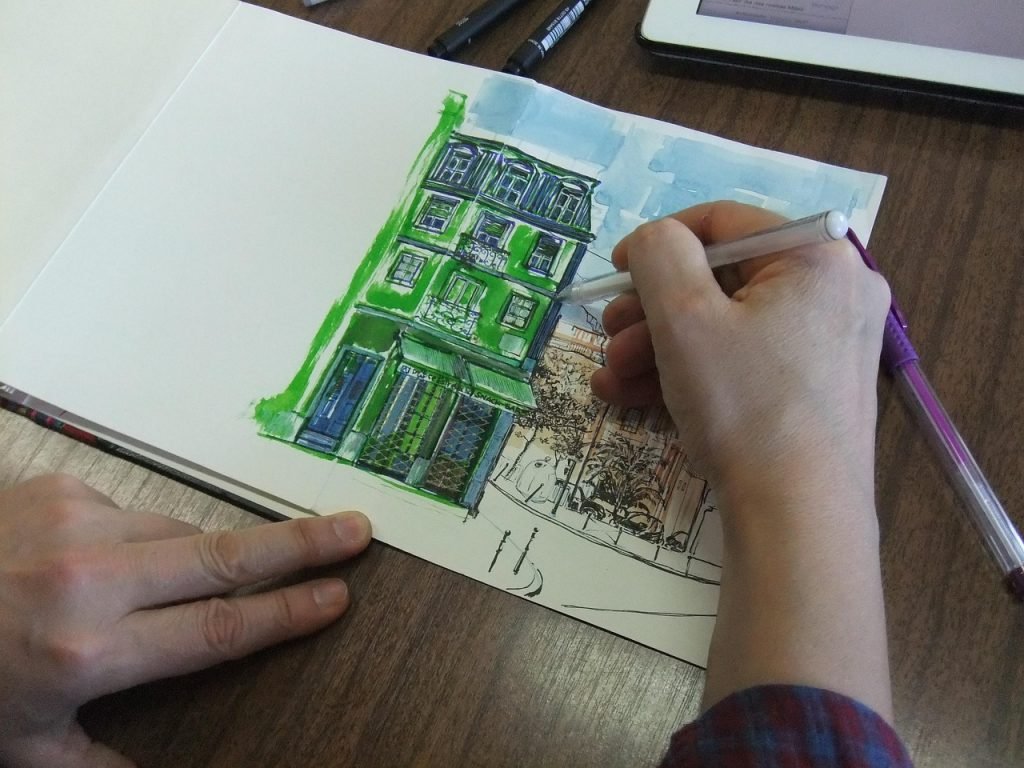
Artists are the most visible sketchbook users, and for good reason. Their pages often become a record of daily practice—gesture drawings, color swatches, ink studies, watercolor notes, thumbnail compositions, and quick observational sketches. Many artists carry small kits: a fountain pen, a brush pen, a travel watercolor set, a mechanical pencil, and a pocket‑sized sketchbook that can handle mixed media.
What makes an artist’s sketchbook so compelling is the honesty. You see the raw thinking, the imperfect lines, the experiments that never make it to a finished piece. These pages show the creative process in real time, and they remind the rest of us that creativity is built on repetition, curiosity, and a willingness to try again.
For many illustrators, a sketchbook becomes more than a place to practice—it becomes a long record of how their visual language grows. You can see the shifts in line quality, the experiments with color, the small risks that eventually shape a personal style. These books hold the early versions of ideas that later become finished pieces, but they also hold the quiet studies that never leave the page. Over time, a sketchbook becomes a kind of creative autobiography, showing the instincts and decisions that define an artist’s voice.
Designers and Creative Directors: Thinking Through Form
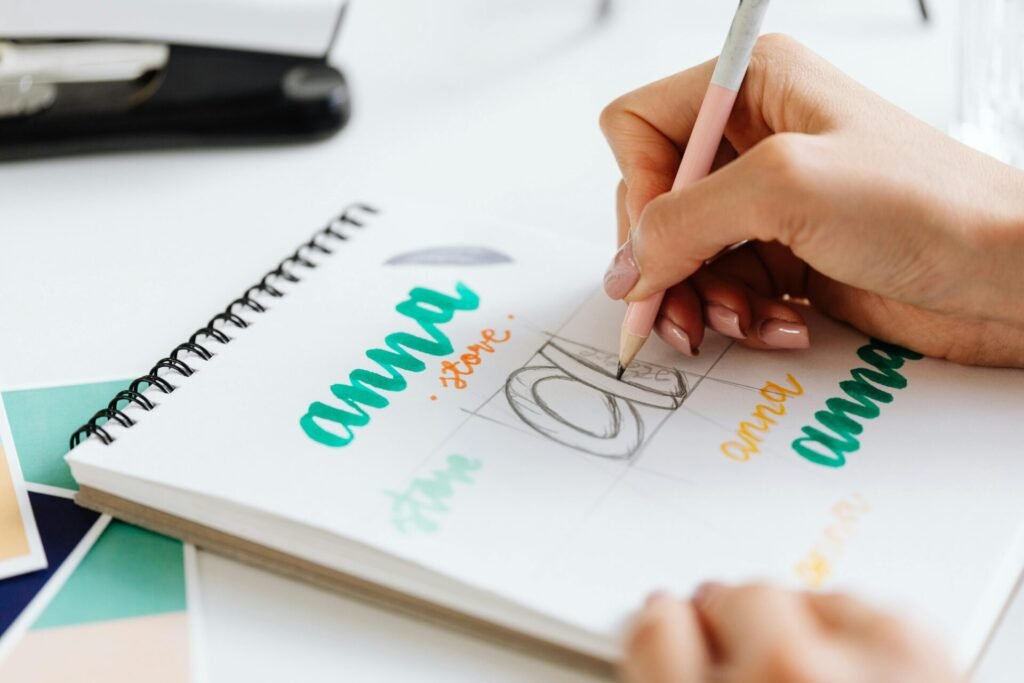
Designers still reach for sketchbooks long before they open software. Graphic designers, UX designers, and creative directors use them to untangle visual problems at a pace no digital tool can match. A pencil moves faster than a cursor, and the page doesn’t ask for precision—it asks for clarity. Wireframes, layout studies, logo variations, color notes, and quick diagrams of user flows fill these books. They’re not meant to be polished. They’re working pages, marked with arrows, circles, and margin notes—evidence of thinking in motion.
A designer’s sketchbook also becomes a long‑term record of their creative identity. Early logo attempts, abandoned compositions, half‑formed concepts, and color experiments accumulate over time. When designers flip back through old pages, they see patterns emerging—recurring shapes, preferred proportions, the beginnings of a style that eventually becomes unmistakably theirs. The sketchbook becomes a mirror, reflecting how their instincts and visual language evolve.
And because designers move through the world with a trained eye, sketchbooks help them bridge inspiration and execution. A color pairing spotted on a storefront, a type treatment glimpsed on packaging, the geometry of a building façade—these quick captures become raw material for future work. The sketchbook keeps the world close, turning everyday observations into usable design fuel.
Architects and Urban Planners: Sketchbooks for Understanding Space
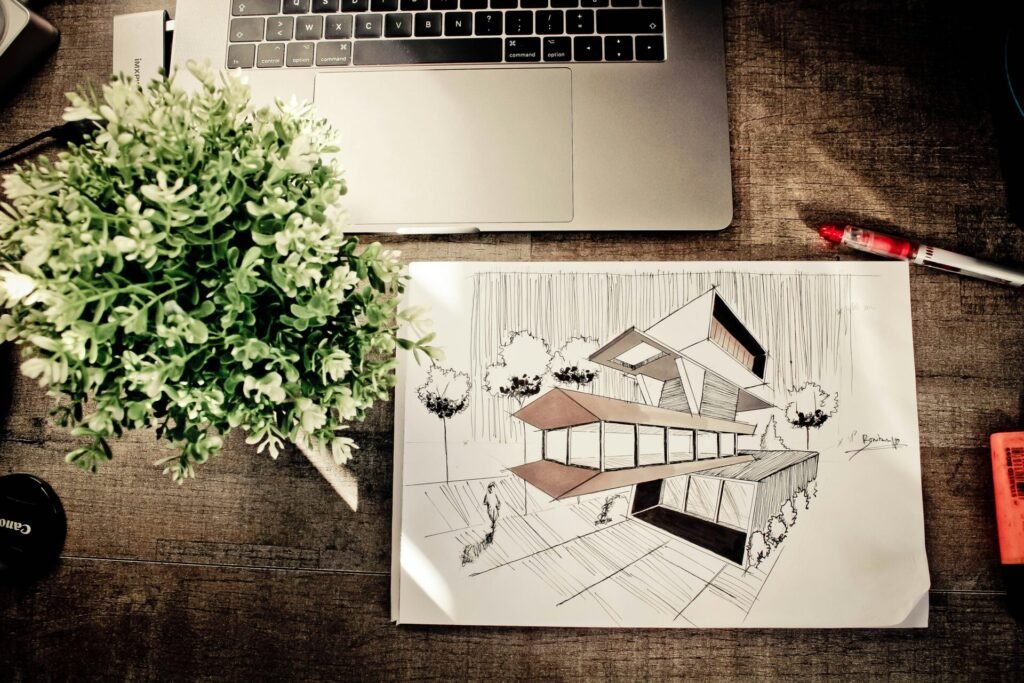
Architects have always trusted sketchbooks to help them see more clearly. Even in a world of CAD, BIM, and photorealistic rendering, the first impulse is often still a pencil. A sketchbook lets them study proportion, light, and structure without the weight of precision software. On site visits, they sketch to understand how a building sits in its environment. In meetings, they sketch to communicate ideas faster than words can manage. In the studio, they sketch to test spatial relationships before committing to a direction. The page becomes a small laboratory where form, material, and intention can shift freely.
Urban planners use sketchbooks in a similar way, but their attention stretches beyond the building to the movement around it. Their pages hold diagrams of pedestrian flow, notes about public spaces, quick maps of neighborhoods, and impressions of how people interact with the built environment. A sketchbook helps them see patterns—how a street breathes, how a plaza gathers people, how a community moves through its daily rhythm.
What both professions share is the need to think spatially. A sketchbook gives them a place to explore that thinking without pressure. It slows the eye, sharpens observation, and keeps the designer connected to the physical world long before the digital tools take over. Over time, these books become quiet records of how their vision evolves—pages filled with early ideas, structural studies, and the first hints of projects that later become real.
Scientists and Researchers: Seeing the Natural World Through Drawing

Scientists have always used sketchbooks to understand what they’re studying. Field biologists, botanists, ecologists, and medical researchers rely on drawing not as decoration, but as a way of thinking. A quick sketch of a leaf’s venation, the posture of an animal, the structure of a cell, or the shape of a coastline captures information that slips past written notes. The act of drawing slows the mind just enough to notice what matters.
In the field, a sketchbook becomes a companion that keeps pace with changing conditions. Researchers sketch the curve of a shoreline before the tide shifts, the behavior of an insect before it disappears, the color of a mushroom cap before the light changes. These pages hold observations that cameras often flatten or miss—temperature, movement, texture, context. A scientist’s sketchbook is less about making art and more about staying awake to the environment.
In the lab, sketchbooks serve a different purpose. Researchers diagram equipment setups, map out experimental steps, and draw cellular structures to understand how they interact. A sketch can reveal relationships that aren’t obvious in data tables or microscope images. It becomes a visual conversation with the work—part documentation, part hypothesis, part quiet problem‑solving.
What makes these sketchbooks so compelling is the blend of precision and curiosity. A scientist might draw the same specimen several times, each sketch revealing something new. They return to old pages to compare seasonal changes, track patterns, or revisit early ideas that suddenly make sense months later. These books become long‑term records of discovery, filled with questions, corrections, and the small insights that eventually lead to larger breakthroughs.
Even in a world of digital imaging and advanced modeling, scientists keep sketchbooks because they offer something technology can’t: a direct, tactile connection to the subject. Drawing forces attention. It builds memory. It deepens understanding. And it reminds researchers that science begins with looking closely at the world, one line at a time.
Medical Professionals: Understanding the Body Through Drawing

People in medicine learn by looking closely, and sketchbooks help them hold on to what they see. Doctors, nurses, physical therapists, and medical students often draw as part of their training because anatomy becomes more memorable when it’s mapped by hand. Muscles, nerves, vessels, and organs settle into long‑term memory when you’ve traced their shapes yourself. A sketchbook turns complex structures into something tactile and personal.
In clinical settings, these books become quiet tools for clarity. A resident might sketch a procedure to understand its sequence. A nurse might diagram a workflow to keep track of patient care. A surgeon might draw a quick cross‑section to explain a diagnosis to a family. These drawings aren’t meant to be beautiful—they’re meant to make sense of the body in real time.
There’s also an emotional side to it. Medicine is demanding work, and sketchbooks often become places where professionals process what they’ve witnessed. A quick drawing made during a break, a small note about a moment that stayed with them, a gesture sketch of a hand or a posture—these pages hold the human weight of the job. They offer a kind of grounding that digital tools can’t replicate.
Even in high‑tech environments, sketchbooks remain essential because they slow the mind just enough to notice what matters. They help medical professionals stay present, stay observant, and stay connected to the people behind the charts and scans. A sketchbook becomes a companion through training and practice—a place where learning, reflection, and care all meet on the page.
Engineers and Technicians: Solving Problems Visually
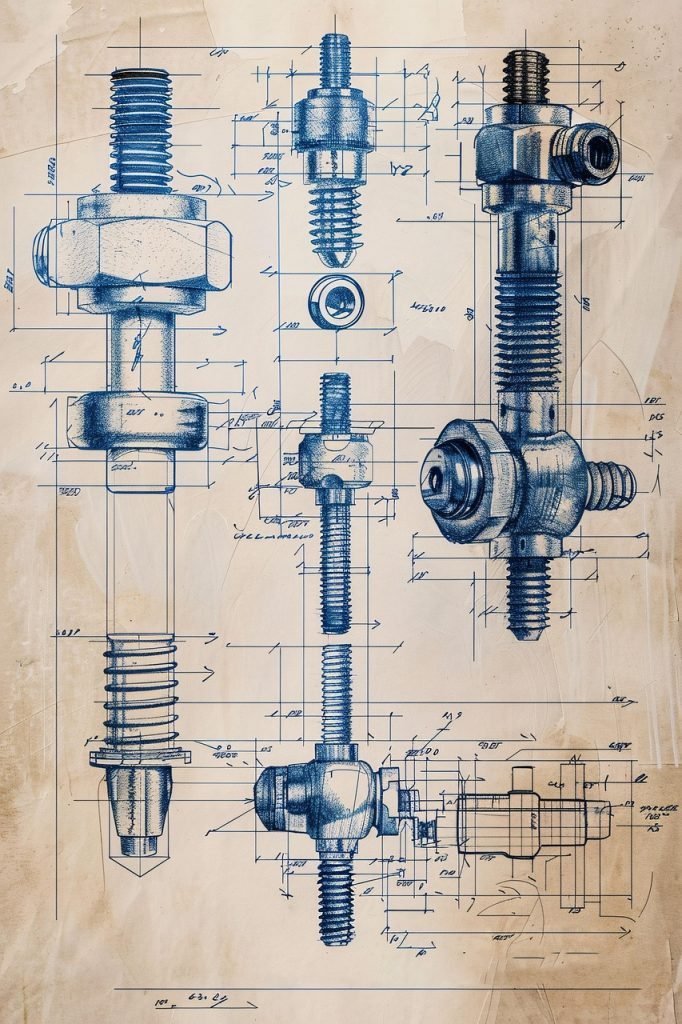
Engineers sketch for the same reason artists do: some ideas only make sense once they’re on paper. Mechanical engineers, electrical engineers, software engineers, and technicians all reach for sketchbooks when they need to understand how a system behaves. Their pages hold circuit paths, mechanical assemblies, airflow studies, material notes, and quick diagrams that help them see the invisible logic behind a problem.
Even in fields built on precision, drawing remains one of the fastest ways to troubleshoot. A sketchbook lets an engineer map out a failure point, test a new configuration, or rethink a mechanism without waiting for a CAD model to load. The page becomes a low‑pressure space where ideas can shift, collide, and resolve themselves. You can watch the thinking unfold—lines added, erased, redrawn, annotated—until the solution finally reveals itself.
What makes an engineer’s sketchbook so compelling is the blend of intuition and structure. One page might hold a rough freehand sketch of a hinge; the next, a clean diagram of a circuit; the next, a note about how a material behaves under stress. These books become working companions, full of half‑formed ideas and quiet breakthroughs that never appear in the final technical drawings.
Over time, engineers return to their sketchbooks the way artists revisit old studies. They flip through past pages to remember how they solved a similar problem, to rediscover an abandoned idea, or to trace the evolution of their own technical instincts. A sketchbook keeps the work human. It slows the mind just enough to see the system clearly, and it gives engineers a place to think with their hands—one line, one diagram, one possibility at a time.
Iteration as a Creative Survival Skill
Across commercial fields, iteration is the heartbeat of the job. A sketchbook becomes the safest place to test variations, adjust proportions, rethink layouts, and push an idea until it finally clicks. You can see the problem‑solving unfold in real time—shifts in composition, small corrections, alternate angles, typography notes, material tests. These pages show the mind working, not performing. And that honesty is what keeps professionals nimble when projects move fast.
Mathematicians and Theorists: Sketchbooks for Visualizing the Invisible

Some professions use sketchbooks to record what they see. Mathematicians and theorists use them to record what can’t be seen at all. Their work lives in abstraction—patterns, proofs, relationships, structures that exist only in the mind until they’re drawn. A sketchbook becomes the place where those invisible ideas take shape, even if only for a moment.
These pages rarely look like traditional drawings. They’re filled with symbols, arrows, geometric constructions, fragments of equations, and conceptual maps that trace the logic behind a problem. A mathematician might sketch a curve to understand its behavior, diagram a proof to see where the reasoning falters, or draw a network to test how variables interact. The page becomes a thinking lab, a space where ideas can shift and collide without the pressure of being correct.
The act of drawing slows the mind just enough to reveal structure. A quick geometric sketch might expose a symmetry that wasn’t obvious before. A line connecting two concepts might spark a new insight. These moments rarely happen on a screen. They happen in the quiet space of a page, where the hand moves at the speed of thought and the mind can wander without constraint.
Theorists—whether in physics, logic, computer science, or philosophy—use sketchbooks in much the same way. They map out conceptual frameworks, sketch models of imaginary systems, or diagram the flow of an argument. These drawings aren’t meant to be polished. They’re meant to help the thinker see the shape of an idea before language can catch up.
There’s a long lineage here. Da Vinci sketched mechanical dreams and mathematical proportions. Turing mapped logic by hand. Ramanujan filled loose pages with insights that would later reshape number theory. Their sketchbooks weren’t archives of finished work—they were records of thought in motion.
Over time, these books become personal histories of exploration. Early attempts at a proof sit beside later refinements. Abandoned ideas resurface with new meaning. A small diagram in the corner of a page becomes the seed of a breakthrough months later. The sketchbook holds the evolution of thought—messy, nonlinear, and deeply human.
For mathematicians and theorists, drawing isn’t decoration. It’s a way of understanding. A sketchbook gives form to the abstract, turning pure thought into something you can hold in your hands, even if only for a page or two.
Inventors and Innovators: Sketchbooks as Engines of Possibility
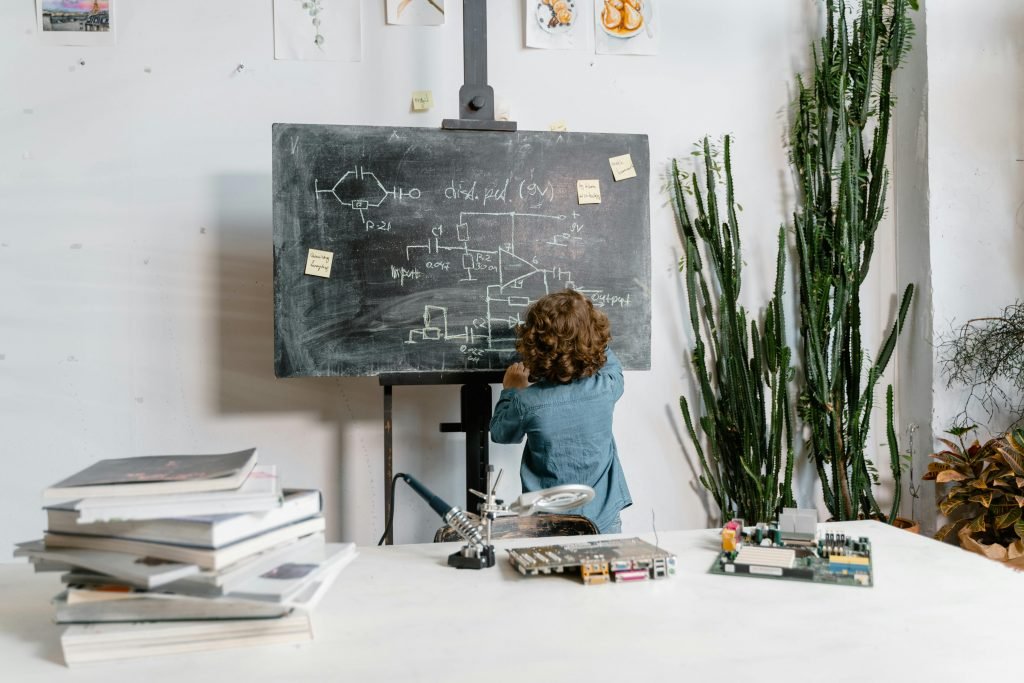
Inventors keep sketchbooks for the same reason artists do: ideas rarely arrive fully formed. They show up as fragments—half a mechanism, a rough diagram, a question scribbled in the margin. A sketchbook gives those fragments a place to land. It becomes a working studio for the mind, a space where curiosity can wander without needing to be correct on the first try.
Most inventors think visually, even when their work is deeply technical. They sketch to understand how parts might move, how systems might interact, how a concept might behave once it leaves the imagination and enters the physical world. These pages are full of experiments: gears that don’t quite mesh, circuits that need rethinking, notes about materials, proportions, tolerances. Nothing is precious. Everything is in motion.


What makes an inventor’s sketchbook so compelling is the way it captures problem‑solving in real time. You can see the thinking shift—one idea branching into another, a diagram corrected, a mechanism simplified. It’s the same iterative rhythm you find in an artist’s book, just tuned to engineering, physics, and practical invention. The page becomes a quiet collaborator, helping the inventor see what the mind alone can’t hold.
Some work on paper, others on tablets, but the impulse is the same: get the idea down before it evaporates. A sketchbook keeps pace with the mind’s speed. It doesn’t judge. It doesn’t slow you down with formatting or precision. It simply gives you a place to explore, revise, and return later with clearer eyes.

Over time, these books become archives of innovation. Early versions of mechanisms sit beside later refinements. Abandoned ideas resurface months later with new potential. A small drawing in the corner of a page becomes the seed of something larger. Inventors flip back through their sketchbooks the way artists revisit old studies—looking for patterns, insights, and the spark that connects past thinking to future breakthroughs.
Invention is rarely a straight line. It’s a conversation between what you imagine and what you can build. A sketchbook keeps that conversation alive, one diagram, one scribble, one possibility at a time.
Writers, Journalists, and Storytellers: Sketchbooks as Narrative Laboratories
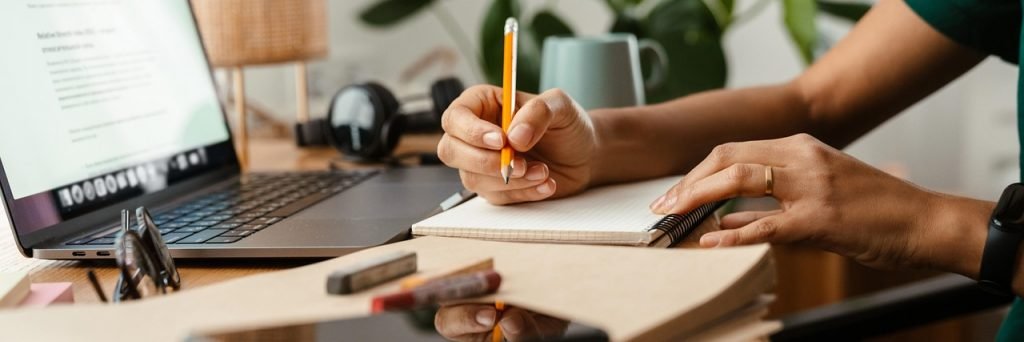
Writers and storytellers often keep sketchbooks that blur the line between notebook and visual diary. These pages hold fragments—character gestures, overheard lines, quick maps of imagined places, notes about light or weather or mood. A sketchbook gives them a place to catch ideas before they drift away, and to explore story worlds without the pressure of structure or polish.
For journalists, the sketchbook becomes a field companion. They sketch a street corner to remember the layout, diagram a timeline, jot down sensory details that a recorder can’t capture. A quick drawing of a room or a crowd can hold atmosphere in a way typed notes never quite manage. The combination of text and image helps them stay grounded in the moment, especially when reporting on places that shift quickly.

Storytellers of all kinds use sketchbooks to think visually. A rough drawing of a setting can unlock tone. A scribbled relationship map can clarify a plot. A thumbnail of a scene can reveal pacing problems long before the writing begins. These pages become quiet testing grounds where ideas can be messy, contradictory, or half‑formed—exactly the state where creative breakthroughs tend to happen.
Some writers work in small pocket books filled with tight handwriting and loose doodles. Others use larger sketchbooks to map out entire story arcs or build fictional worlds. Many move between physical and digital tools, sketching on paper when they want to feel the idea in their hands, switching to tablets when they need layers, color, or quick rearranging. The medium shifts, but the impulse stays the same: to see the story before committing it to prose.
Over time, these sketchbooks become archives of imagination. Old pages reveal abandoned characters, forgotten settings, or early versions of ideas that later grew into something meaningful. Writers flip through them the way artists revisit old studies—looking for sparks, patterns, and the threads that connect past thinking to the work they’re doing now.
Educators and Students: Learning Through Drawing
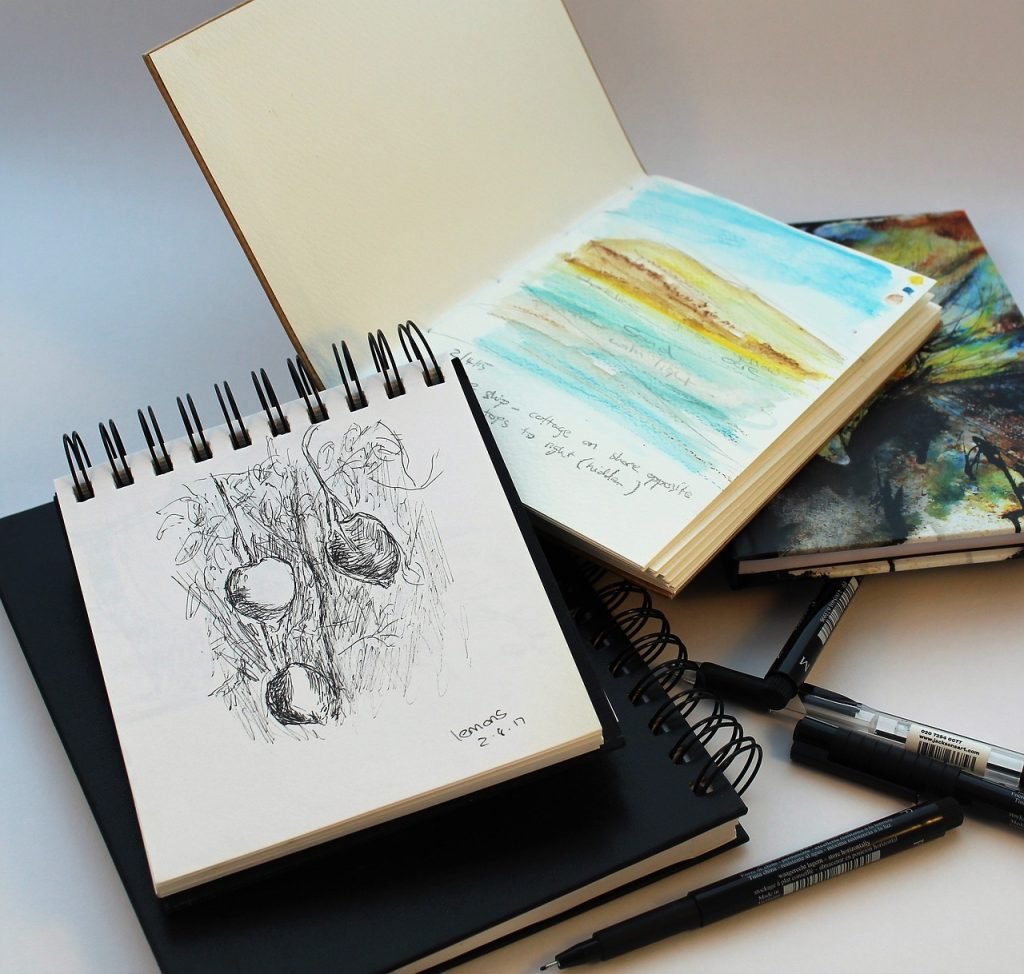
Teachers use sketchbooks to plan lessons, diagram concepts, and track classroom ideas. Students use them to take notes, sketch diagrams, and explore creative thinking. In art schools, sketchbooks are often required, but even in STEM programs, drawing is increasingly recognized as a powerful learning tool.
A sketchbook helps students slow down, reflect, and engage with material more deeply. It becomes a record of growth—something they can look back on to see how their thinking has evolved.
Tradespeople and Makers: Sketching as a Practical Tool
Carpenters, welders, ceramicists, woodworkers, and fabricators often keep sketchbooks filled with measurements, joinery diagrams, glaze tests, and construction notes. These pages are practical and direct. They help makers plan projects, track materials, and solve problems on the fly.
A sketchbook becomes a workshop companion—dusty, worn, and full of real‑world knowledge.
Travel Sketchbooks: Keeping Place Alive on the Page

Travel changes the way you see, and a sketchbook makes sure you don’t lose the details that matter. Urban sketchers, architects, designers, and curious travelers all reach for their books when they want to slow down long enough to understand a place. A quick drawing of a street corner, a handwritten note about the light, a loose study of a market stall—these small records become anchors to moments that would otherwise fade into memory.
What makes travel sketching so compelling is the way it pulls you into the present. You sit, you look, you breathe with the scene. You notice the rhythm of a plaza, the geometry of a roofline, the color of a café awning, the way people move through a space. A sketchbook turns travel into a conversation rather than a checklist. You’re not collecting sights; you’re studying them.
Urban sketchers know this well. They treat cities as open studios, drawing whatever is in front of them—architecture, commuters, street vendors, quiet corners, loud intersections. Their pages read like lived maps, full of quick gestures and personal impressions. Nothing is staged. Nothing is precious. The charm comes from the immediacy, the honesty of drawing what’s actually happening.


For travelers who aren’t artists by trade, a sketchbook becomes a personal archive. A drawing of a temple or a train station holds more emotional weight than a photo because you spent time with it. You felt the air, heard the noise, noticed the textures. The page becomes a sensory record: the warmth of the sun, the smell of food stalls, the sound of a language you don’t speak but loved listening to. These impressions settle into the paper.
Some people travel with small kits—just a pen, a pocket watercolor set, and a book that fits in a jacket. Others use tablets, sketching digitally on trains and in airports. The medium doesn’t matter. What matters is the act of paying attention. Travel sketching isn’t about making perfect drawings; it’s about staying awake to the world.
Digital Creators: Sketchbooks in a Screen‑Heavy World
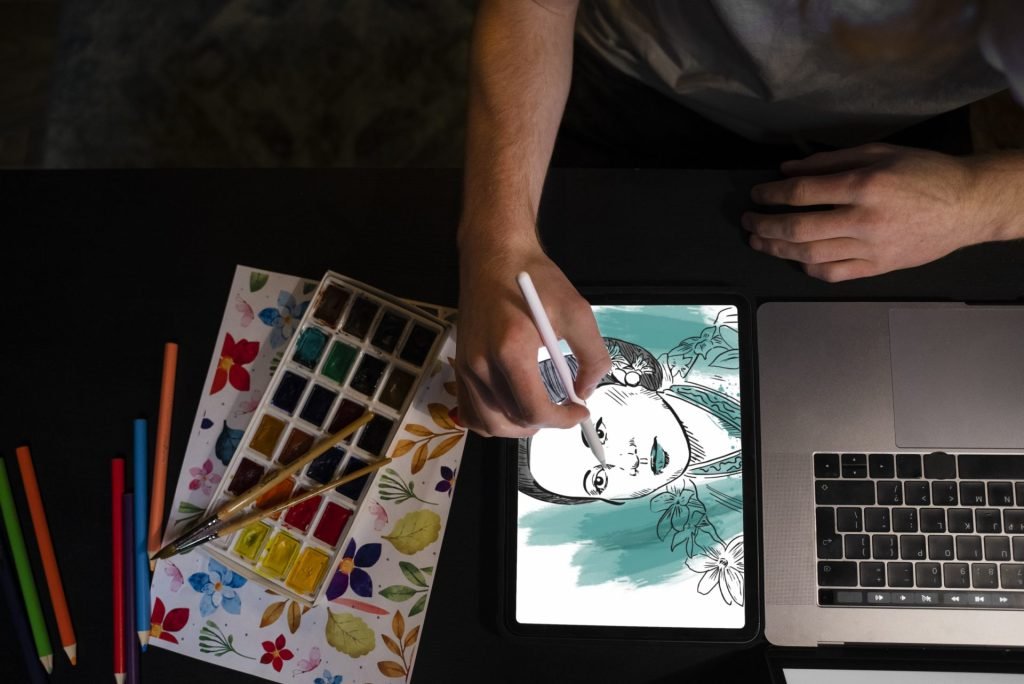
Even digital artists and 3D modelers often keep physical sketchbooks. There’s something grounding about stepping away from a screen and letting your hand move freely. Many digital creators use sketchbooks to warm up, brainstorm, or capture ideas before they become digital assets.
Some use hybrid workflows: sketch on paper, photograph the page, and bring it into Procreate or Photoshop for refinement.
Sketchbooks as Living Archives of Style and Identity
Professionals often return to older sketchbooks not out of nostalgia but because they hold the DNA of their creative voice. You can track how a designer’s sense of proportion matures, how a fashion illustrator’s line becomes more confident, how a concept artist’s world‑building deepens. These books become long‑term companions—quiet records of growth, shifts in taste, and the subtle evolution of personal style. They’re not portfolios; they’re memory devices.
The Emotional Side of Keeping a Sketchbook
Across all professions, sketchbooks offer something that software can’t: a sense of presence. The tactile feel of paper, the sound of a pencil, the way ink settles into fibers—these small sensory details create a connection between the mind and the hand.
A sketchbook becomes a private space where you can think without pressure. It’s a place to experiment, to make mistakes, to record fleeting ideas, and to stay rooted in your own creative identity.
Capturing Real‑World Observations Before They Disappear
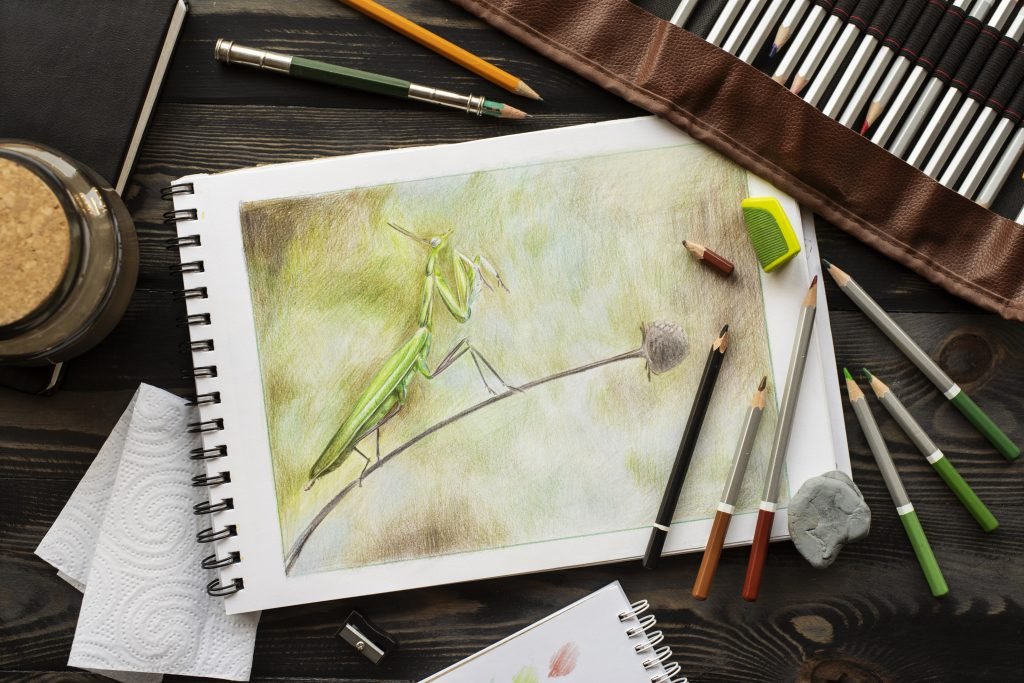
Every profession has its own way of noticing the world, but a sketchbook is what turns those passing impressions into something you can return to later. Designers catch a color pairing on a stranger’s jacket. Architects pause at the way a beam meets a column. Retail creatives study how light falls across a product display. These moments vanish quickly, but a quick sketch pins them to the page before they slip away.
What makes these studies so valuable is their immediacy. They’re not polished, not overthought, not filtered through software or mood boards. They’re raw notes from the field—your eye responding to something real, something specific, something that struck you enough to reach for a pen. Over time, these fragments become a personal reference library, far more meaningful than anything pulled from stock images or trend decks.
 Sketchbooks.org | SKETCHBOOK MATERIALS
Different Types of Ink Pens
Explore the diverse world of ink. Discover the varying personalities of fineliners, fountain pens, and ballpoints for your drawing practice.
Frequently Asked Questions
Why do so many professions use sketchbooks?
Because drawing helps people think more clearly, observe more deeply, and communicate ideas quickly.
Do sketchbooks need to be artistic to be useful?
Not at all. Many sketchbooks are purely functional, filled with diagrams, notes, and quick studies.
What materials do professionals commonly use?
Most rely on simple tools like graphite pencils, fineliners, brush pens, and portable sketchbooks with durable paper.
Are digital sketchbooks as effective as physical ones?
Both work well. Physical sketchbooks offer tactile focus, while digital tools offer flexibility and layering.
How often should someone use their sketchbook?
There’s no rule. Some people use them daily; others only when a project or idea calls for it.
Do non‑artists benefit from drawing?
Absolutely. Drawing improves observation, memory, and problem‑solving across many fields.
What size sketchbook is best for professional use?
Most choose portable sizes like A5 or pocket notebooks that fit easily into a bag or coat pocket.
Can sketchbooks help with stress?
Many people find the act of drawing calming, grounding, and mentally restorative.
Final Thoughts
A sketchbook is one of the simplest tools a person can carry, yet it quietly supports some of the most complex thinking across modern professions. Whether you’re designing a building, studying anatomy, planning a lesson, troubleshooting a circuit, or simply trying to stay connected to your creative self, a sketchbook gives you a place to slow down and see your work with fresh eyes.
Ready to Share Your Work?
If your sketchbook could transport you, where would you go to sketch?