Table of Contents
The Power of Drawing Outdoors
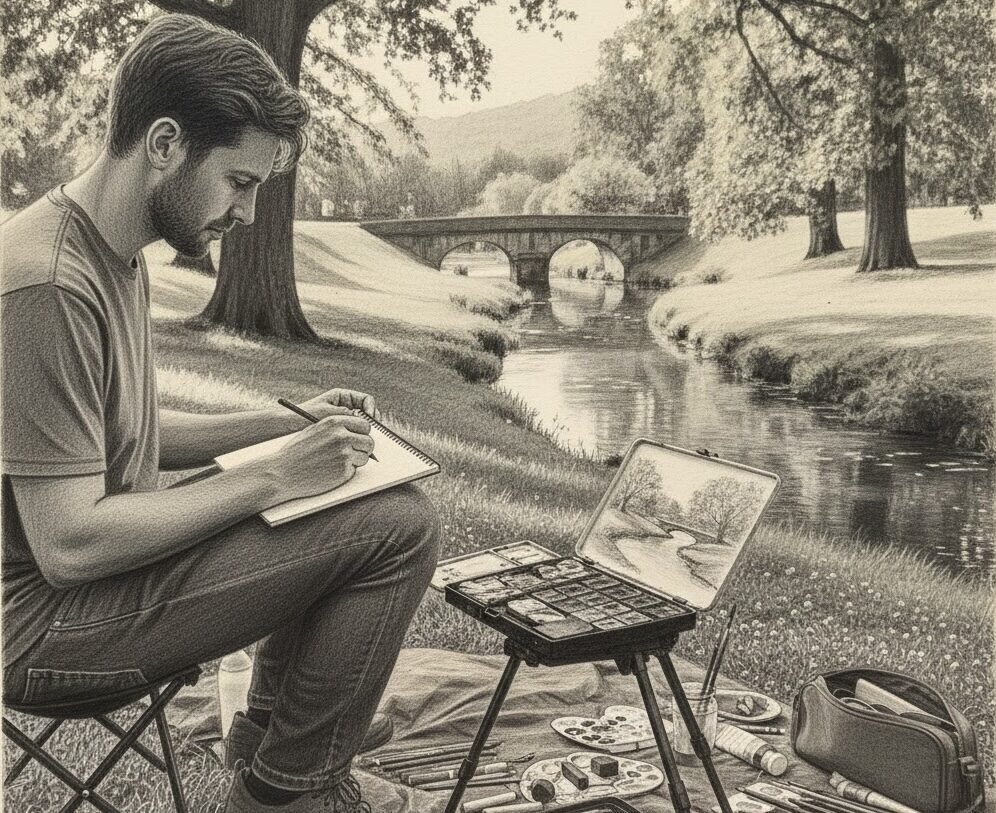
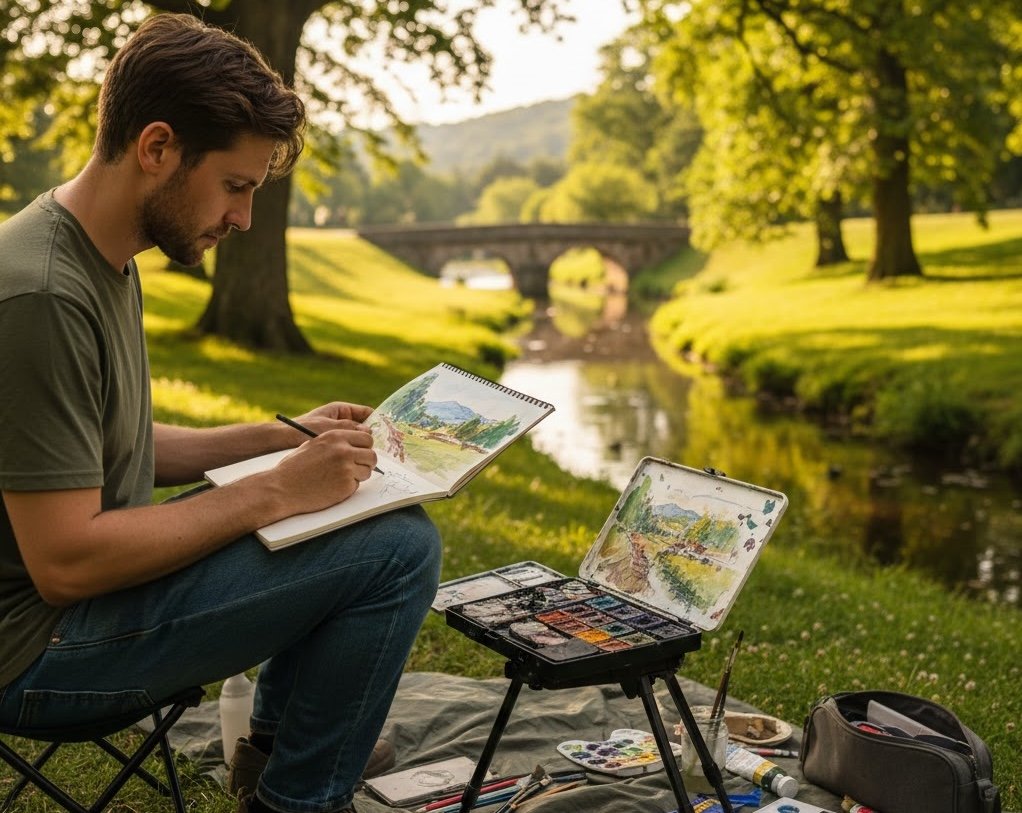
Plein air sketching—drawing directly from life in the open air—is one of the most transformative practices an artist can adopt. Whether you’re a beginner learning to observe more closely or an experienced sketcher refining your visual language, working outdoors forces you to see differently, think faster, and respond to the world with immediacy. This guide explores why plein air sketching improves your art, the tools that make the process smoother, and the techniques that help you capture the energy of the moment.




Why Plein Air Sketching Makes You a Better Artist
Plein air sketching strengthens your artistic skills in ways studio work simply can’t replicate. When you sketch outdoors, you’re immersed in shifting light, moving subjects, and unpredictable conditions. These challenges sharpen your ability to make quick decisions, simplify complex scenes, and capture the essence of a place. You learn to trust your instincts, refine your hand‑eye coordination, and develop a more intuitive sense of composition.
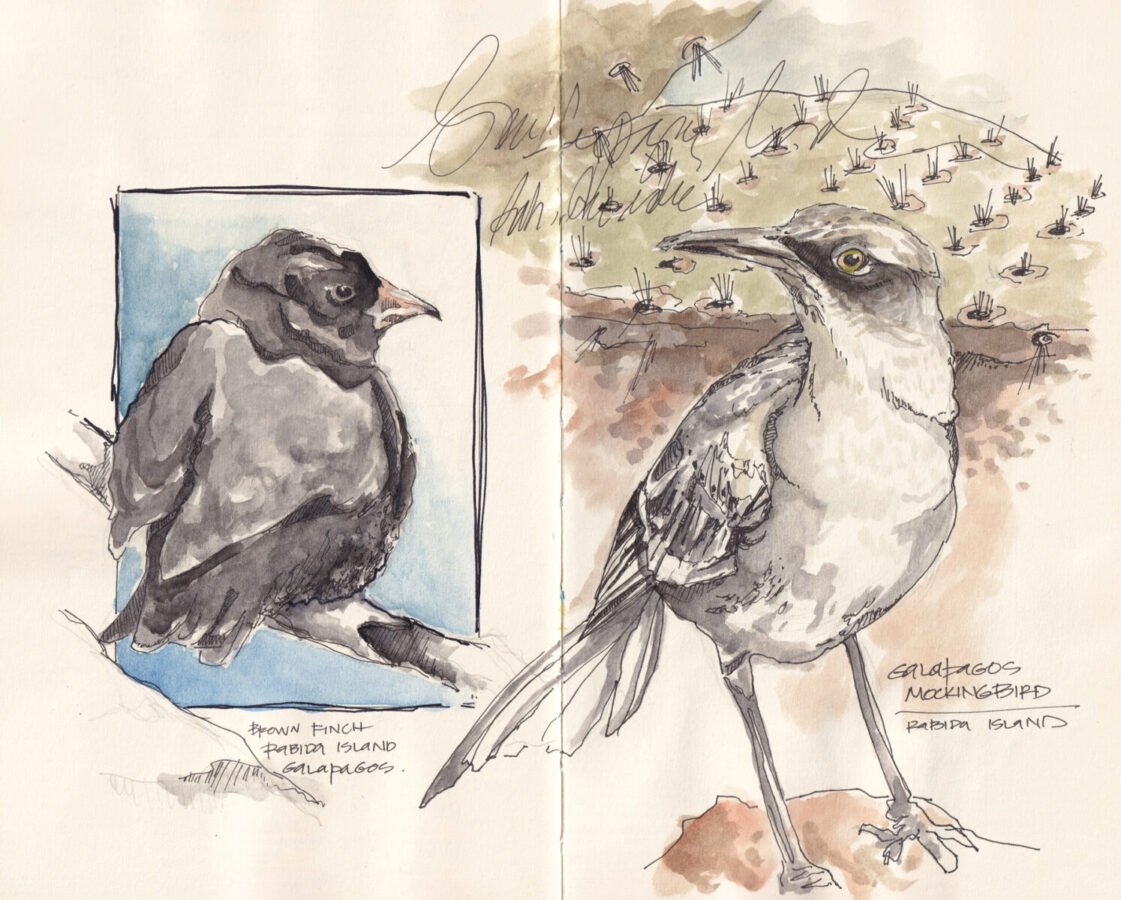
Working on location also deepens your connection to your surroundings. Instead of relying on photos—which flatten perspective and mute color—you experience depth, atmosphere, and texture firsthand. This direct engagement leads to more expressive lines, richer tonal values, and sketches that feel alive.
credit: terrigoodness
The Benefits of Plein Air Sketching
Improved Observation Skills
Drawing outdoors trains your eyes to notice details you might otherwise overlook. You become more aware of subtle shifts in light, the rhythm of tree branches, the way shadows stretch across a sidewalk, or the gesture of a passerby. These observational skills carry over into every form of drawing, from figure studies to urban sketching.
Stronger Composition and Design
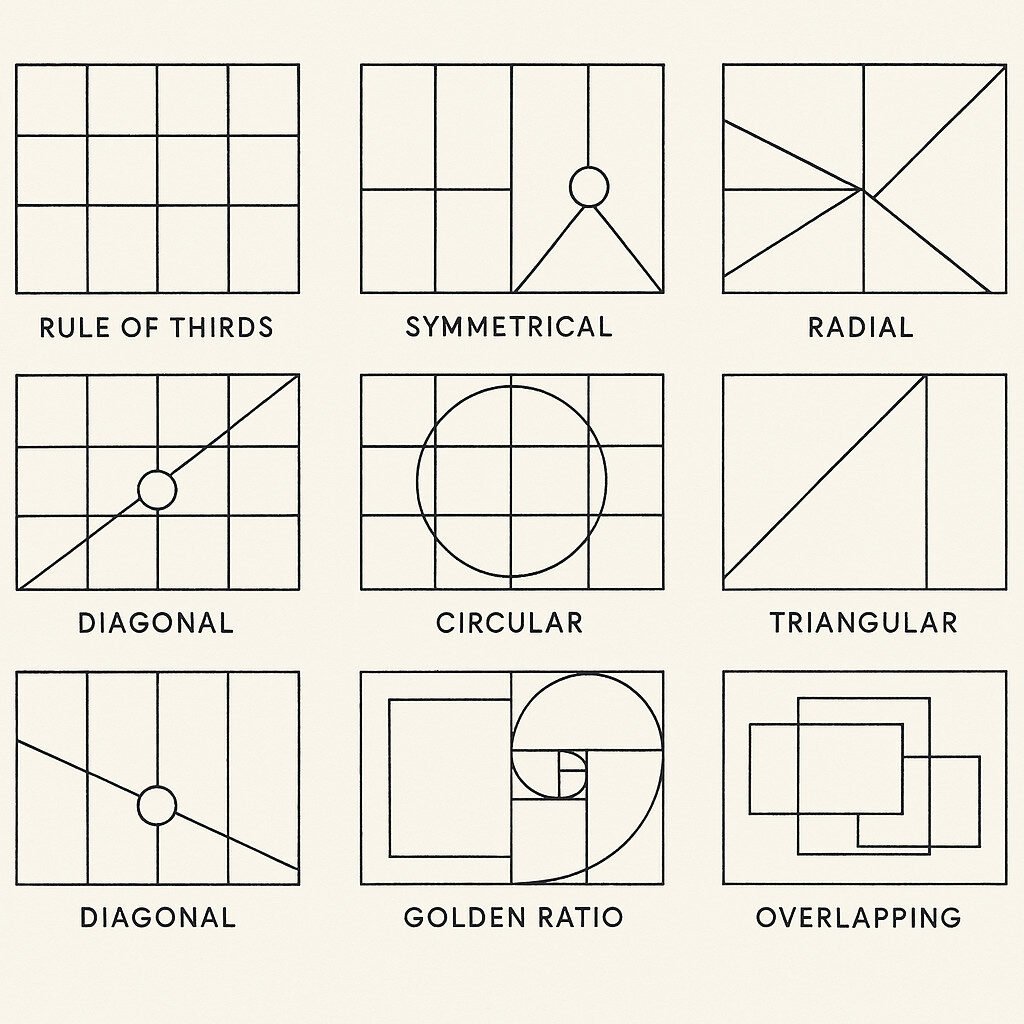
When you’re surrounded by visual information, you must quickly decide what to include and what to leave out. Plein air sketching teaches you to simplify shapes, identify focal points, and build compositions that feel balanced and intentional. Over time, you develop a natural sense for framing scenes and guiding the viewer’s eye.
Faster, More Confident Linework
Outdoor sketching encourages speed and decisiveness. You learn to commit to your marks, embrace imperfections, and capture movement with fluid lines. This confidence translates beautifully into studio work, where your strokes become more expressive and assured.
A Deeper Understanding of Light and Color
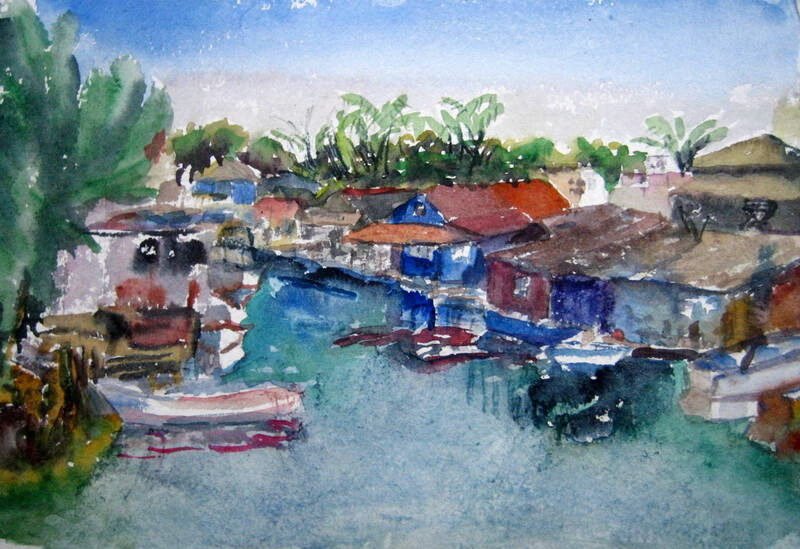
Natural light is dynamic—it shifts minute by minute. Sketching outdoors helps you understand how sunlight affects color temperature, shadow shapes, and atmospheric perspective. Even if you’re working in monochrome, you begin to “see” color relationships more clearly.
Emotional and Creative Renewal
Plein air sketching reconnects you with the joy of drawing. Being outside—whether in a park, a city street, or a quiet corner of your neighborhood—refreshes your creativity. Many artists find that location drawing reduces stress, sparks new ideas, and helps them break out of creative ruts.
Essential Tools for Plein Air Sketching
Sketchbooks and Paper
Choose a sketchbook that suits your medium and environment. A sturdy, portable sketchbook with thick pages works well for pencil, ink, and light washes. For watercolor sketching, select a book with heavier, textured paper that can handle moisture without buckling. Spiral-bound books are convenient for quick page turns, while hardbound books offer durability and a stable surface.
Drawing Tools
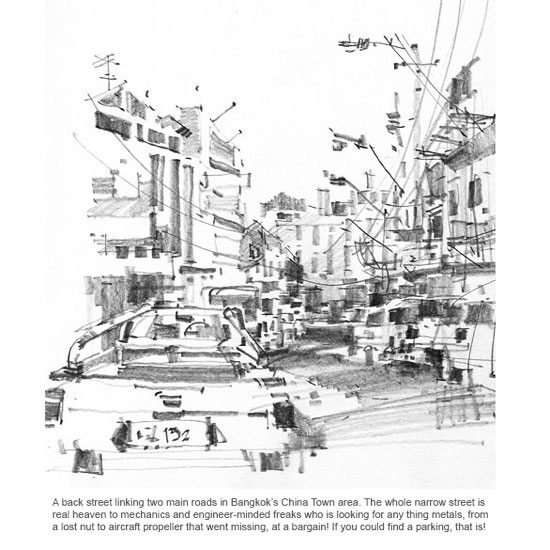
Pencils, pens, and brush pens are ideal for plein air work. Graphite pencils allow for soft shading and quick adjustments. Waterproof fineliners and fountain pens create crisp lines that hold up well outdoors. Brush pens add expressive strokes and are excellent for capturing foliage, clouds, and organic shapes.
Color Tools
If you enjoy working in color, consider a compact watercolor set, watercolor pencils, or alcohol markers. Watercolors are lightweight and versatile, while markers offer bold, immediate color. Watercolor pencils are especially convenient because they can be used dry or activated with a small water brush.
Portable Accessories
A few simple accessories can make plein air sketching more comfortable:
- A lightweight folding stool
- A small travel palette
- Clips to hold pages in the wind
- A water brush or small water container
- A pencil case with essential tools
- A sun hat or shade to reduce glare
These items help you stay focused and prepared for changing conditions.


Techniques for Successful Plein Air Sketching
Start with Gesture and Big Shapes
Begin each sketch by blocking in the major shapes and overall gesture of the scene. This helps you establish proportions and composition before diving into details. Think in terms of silhouettes, angles, and large value masses.
Work from General to Specific
Once the big shapes are in place, gradually refine your sketch. Add mid‑tones, textures, and smaller details. Avoid getting lost in one area too early—keep the whole drawing developing at the same pace.
Capture Light Quickly
Light changes fast outdoors. Identify the direction of light and the main shadow shapes early in the process. Even a simple indication of shadow can anchor your sketch and give it structure.
Embrace Imperfection
Plein air sketching is about capturing the moment, not creating a perfect drawing. Allow your lines to be loose, your marks to overlap, and your colors to blend unpredictably. These qualities give your sketches energy and authenticity.
Use Selective Detail
You don’t need to draw everything. Choose one or two focal areas to refine, and let the rest remain suggestive. This creates visual interest and keeps your sketch from feeling overworked.
Frequently Asked Questions
What is plein air sketching?
It’s the practice of drawing outdoors from direct observation, capturing real‑time scenes and natural light.
Do I need expensive tools to start?
No, a simple sketchbook and pencil are enough to begin.
How long should a plein air sketch take?
Anywhere from a few minutes to an hour, depending on your style and goals.
What if the weather changes while I’m drawing?
Adapt quickly—simplify the scene, adjust your values, or start a new sketch.
Can beginners try plein air sketching?
Absolutely, it’s one of the best ways to build foundational drawing skills.
Should I use color or stick to black and white?
Either works; choose what feels comfortable and supports your learning.
How do I handle people watching me draw?
Most people are curious and friendly; focus on your sketch and enjoy the moment.
What’s the best time of day for plein air sketching?
Early morning and late afternoon offer the most interesting light.
Can plein air sketches become finished artworks later?
Yes, many artists use them as studies for larger studio pieces.
Final Thoughts
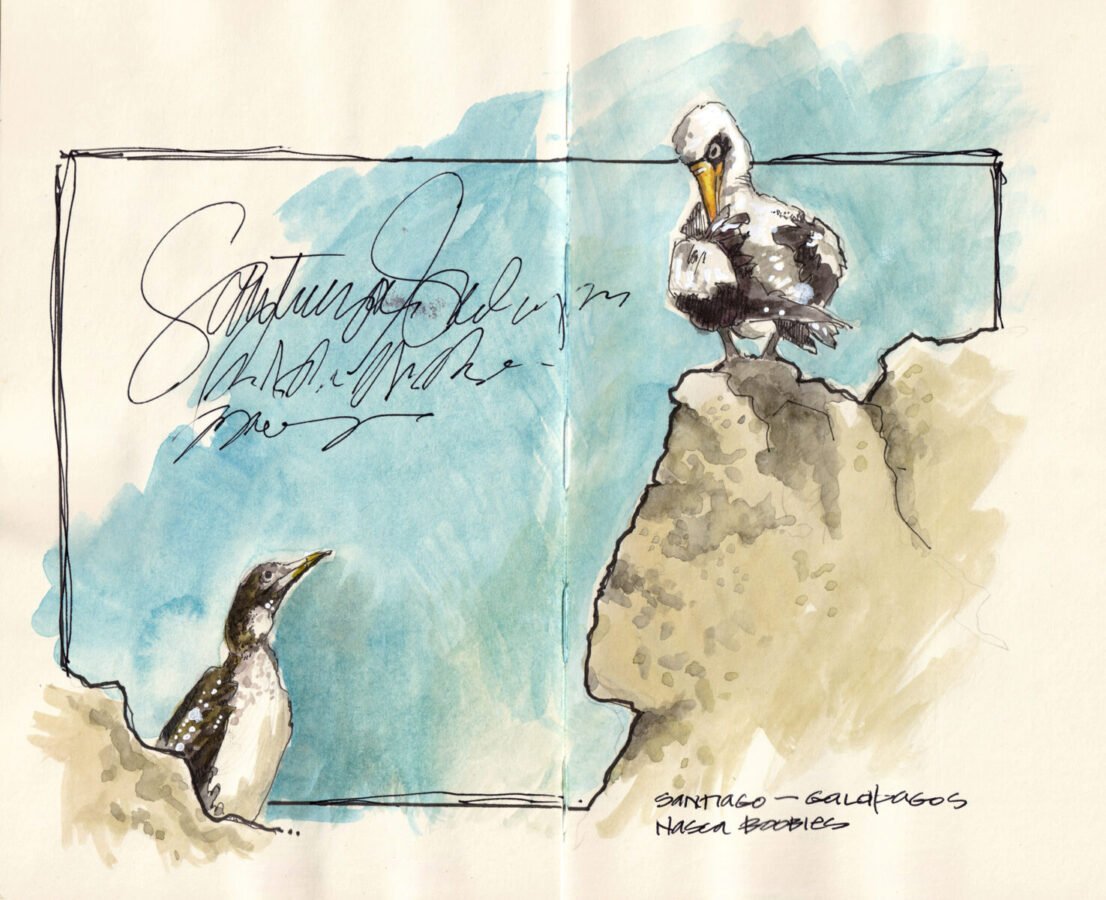
Plein air sketching is more than a technique—it’s a way of seeing. By stepping outside and drawing from life, you sharpen your observation skills, strengthen your compositions, and develop a more confident, expressive style. With simple tools and a willingness to explore, you can transform everyday scenes into meaningful studies that enrich your artistic practice. Whether you’re sketching in a bustling city, a quiet park, or your own backyard, plein air drawing invites you to slow down, look closely, and connect with the world in a deeper, more creative way.
credit: terrigoodness
Ready to Share Your Work?
How do you handle "bad" sketches or pages you don't like?
It’s hard to not like any of my outside drawings. They are alive and bring me back to the place and time.