Understanding Composition in Art
Defining Composition
Composition is the deliberate arrangement of visual elements—shapes, colors, lines, textures, and space—within a piece of art. It is the framework that determines how viewers experience the work, guiding their eyes and shaping their emotional response. A strong composition ensures that every element contributes to the overall impact rather than competing for attention.
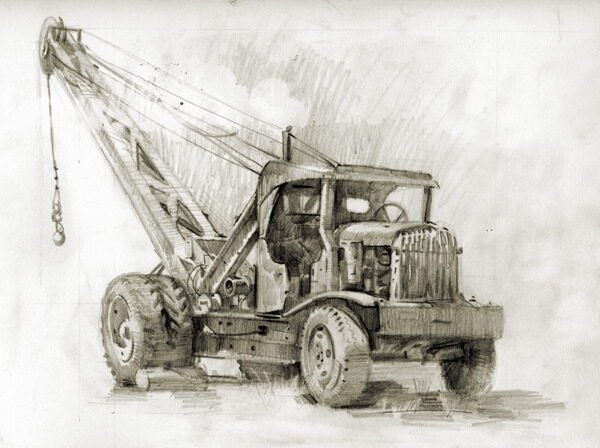
credit: EMGIST
Why Composition Matters
A well-constructed composition does more than make an artwork visually appealing. It establishes rhythm, balance, and harmony, while also creating tension or drama when needed. By controlling placement and proportion, artists can evoke specific moods, highlight focal points, and lead the viewer through a narrative embedded in the image.
The Role of Intention



Every composition begins with intention. Artists decide what they want the viewer to feel or understand, then build the arrangement to support that goal. For example, a centered subject may convey stability, while diagonal lines suggest movement and energy. Intention transforms composition from a technical skill into a storytelling device.
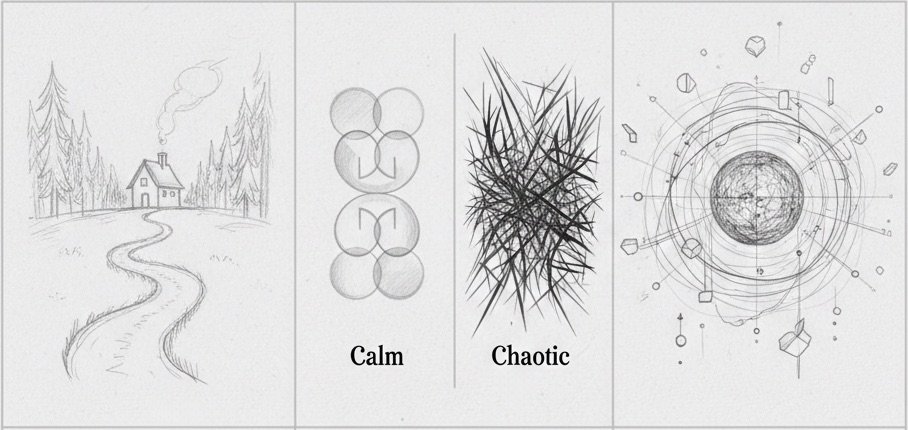
Storytelling: Composition directs the viewer’s journey across the artwork, revealing meaning step by step.
Mood Creation: Choices in symmetry, contrast, and spacing influence whether a piece feels calm, chaotic, or dynamic.
Visual Engagement: Effective composition keeps the viewer’s eye moving, preventing stagnation or disinterest.
Why Composition Matters
Visual Clarity
A strong composition provides structure and readability, ensuring that the viewer immediately understands the subject and intent of the artwork. Without clarity, even the most skillful rendering can feel confusing or overwhelming. By organizing elements thoughtfully—whether through spacing, alignment, or focal points—artists prevent clutter and guide attention to what truly matters.
Emotional Impact
The arrangement of visual elements directly influences how an artwork feels. Symmetry can evoke calm and stability, while diagonals and asymmetry may create tension or excitement. Even subtle choices, such as the placement of a figure within negative space, can generate mystery or intimacy. Composition becomes the invisible hand shaping the emotional resonance of the piece.
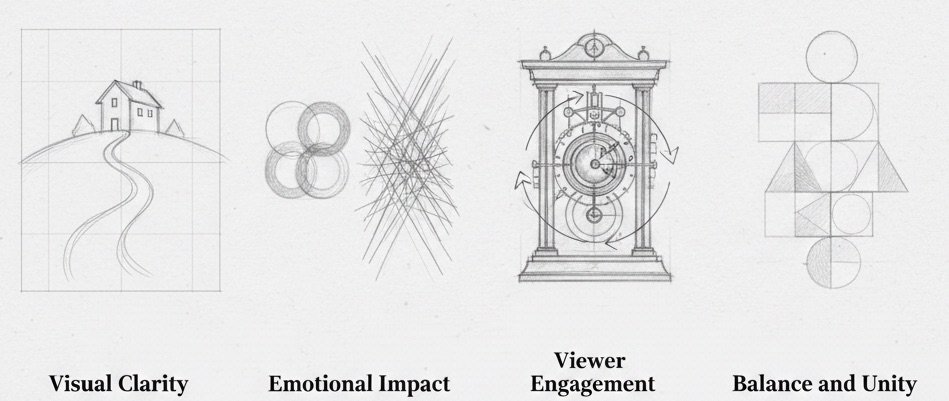
Viewer Engagement
Strategic composition keeps the viewer’s eye moving across the artwork, encouraging exploration rather than passive observation. Leading lines, contrasts, and rhythm within the arrangement act like pathways, pulling the viewer deeper into the image. This engagement transforms a static piece into an active experience, where the audience participates in discovering meaning.
Balance and Unity
Even in abstract or chaotic scenes, composition provides a sense of order. Balance doesn’t always mean symmetry—it can be achieved through contrast, weight distribution, or color harmony. Unity ensures that all elements feel connected, creating cohesion across the artwork. Together, balance and unity allow diverse components to coexist without competing, reinforcing the overall narrative and aesthetic.
Essential Types of Composition in Art
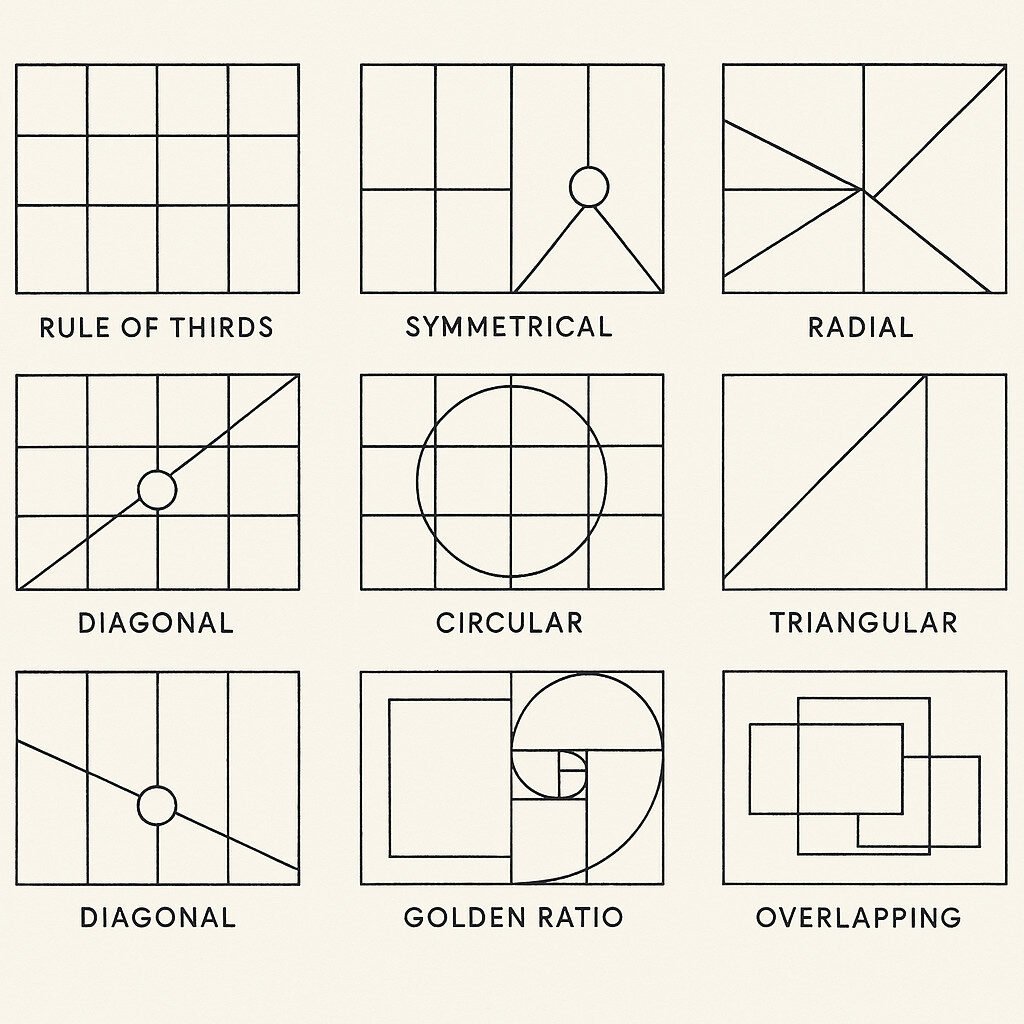
- Rule of Thirds
- Symmetrical Composition
- Asymmetrical Composition
- Radial Composition
- Triangular Composition
- Diagonal Composition
- Circular or Spiral Composition
- Framing Composition
- Golden Ratio
- Overlapping and Layered Composition
Rule of Thirds
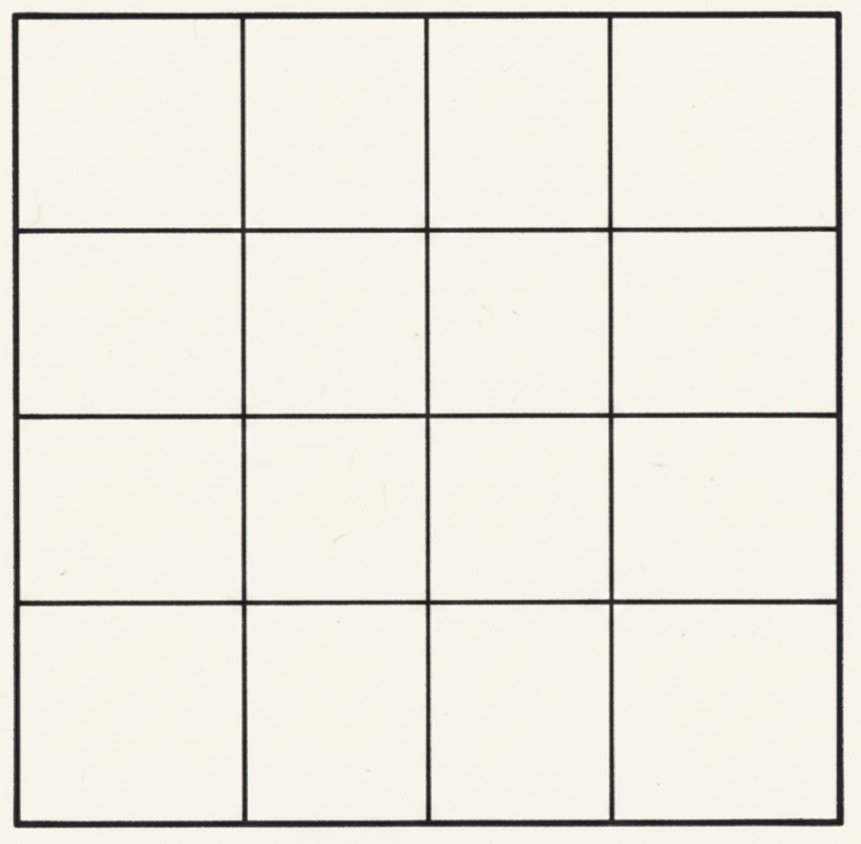
Divide your canvas into a 3×3 grid. Place focal points along the lines or at their intersections to create balance and tension. This technique avoids centering the subject and adds visual interest.
Best for: Landscapes, portraits, and photography
Why it works: It mimics natural eye movement and creates dynamic balance
Symmetrical Composition
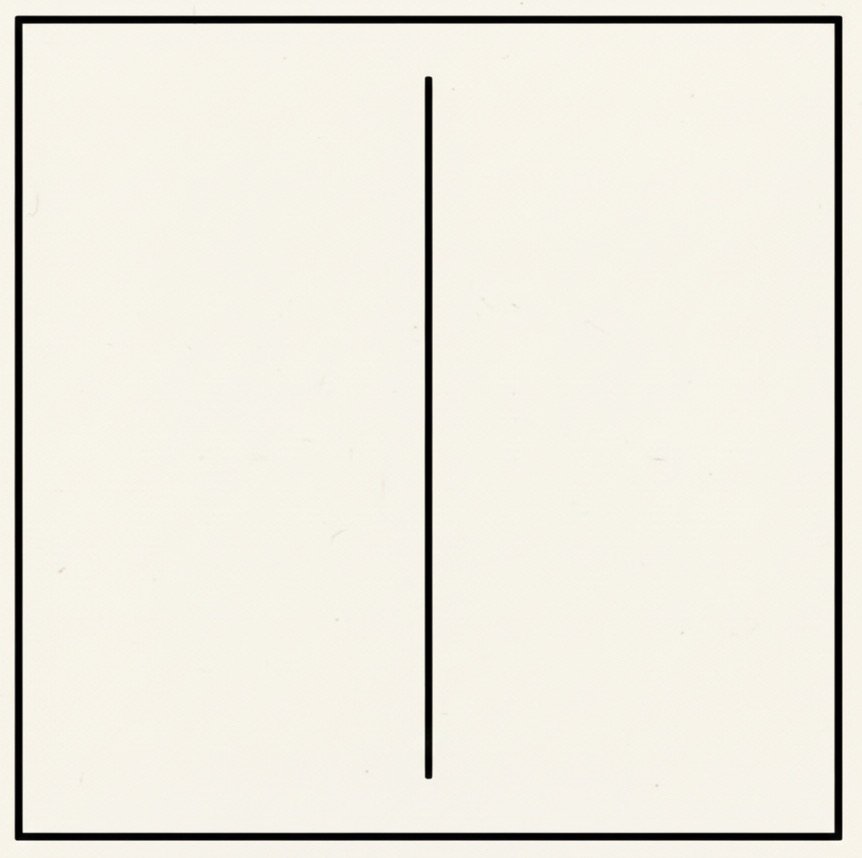
Both sides of the artwork mirror each other, either exactly or with slight variation.
This creates a sense of formality, stability, and calm.
Best for: Religious art, architecture, formal portraits
Why it works: It feels harmonious and grounded
Asymmetrical Composition
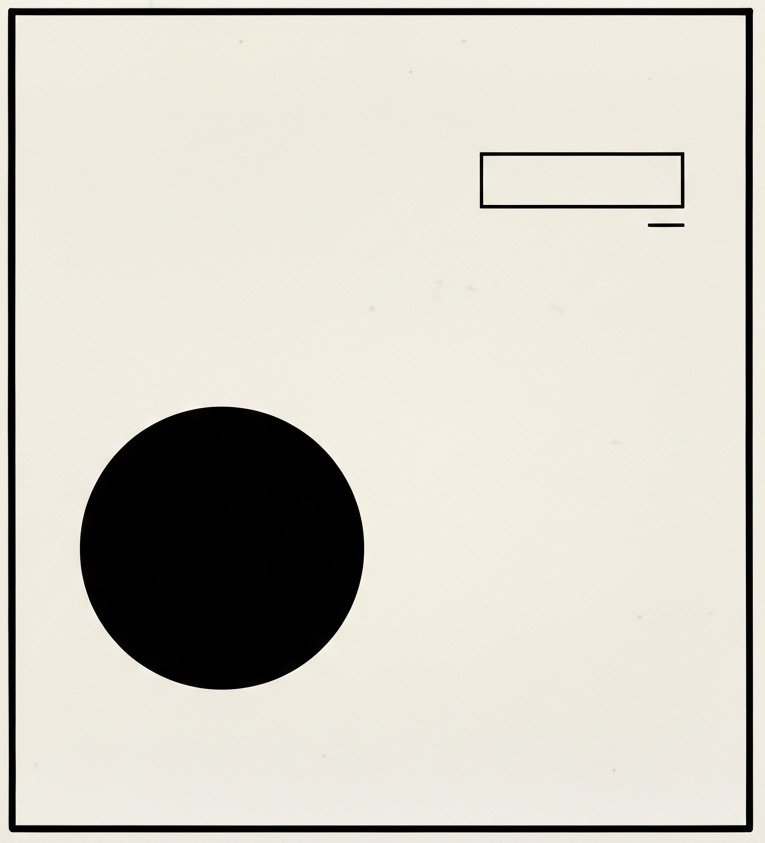
Balance is achieved through contrast rather than mirroring. A large object on one side might be balanced by several smaller ones on the other.
Best for: Modern art, editorial design, expressive work
Why it works: It feels natural and dynamic without being chaotic
Radial Composition
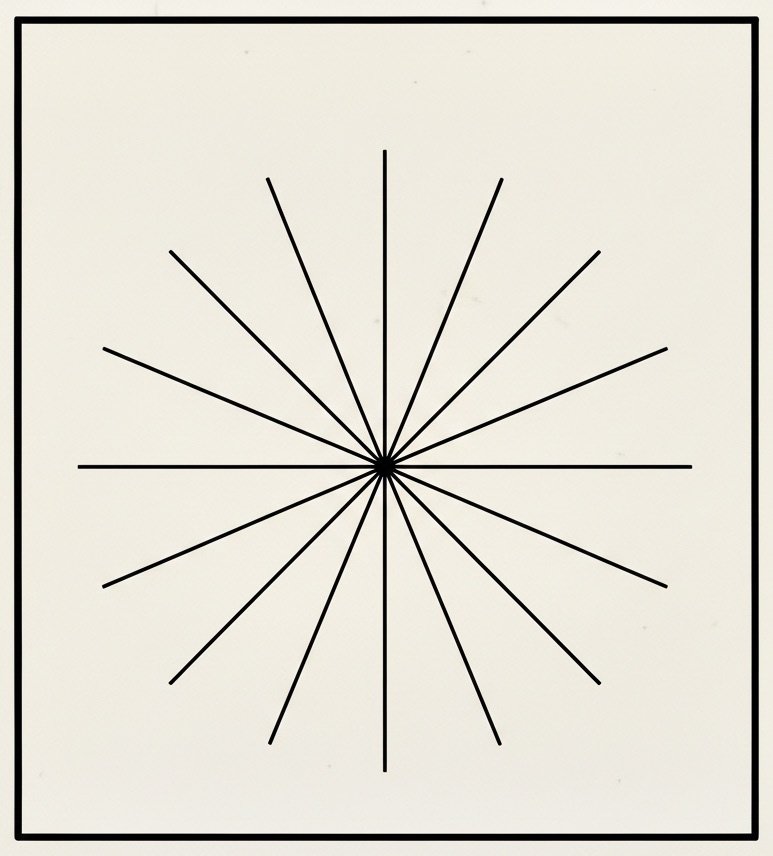
Elements radiate from a central point, like spokes on a wheel. This draws the viewer’s eye inward or outward in a circular motion.
Best for: Mandalas, floral designs, spiritual or symbolic art
Why it works: It creates movement and focus simultaneously
Triangular Composition
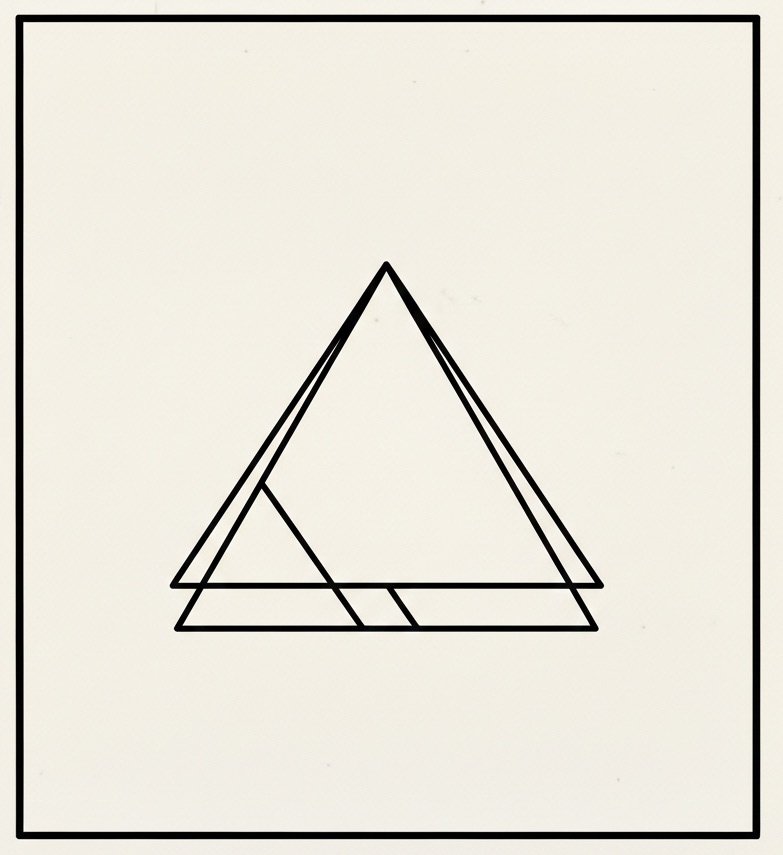
Subjects are arranged in a triangle or pyramid shape. This structure is stable and directs the eye upward or across the base.
Best for: Classical painting, group portraits, still life
Why it works: It provides visual hierarchy and balance
Diagonal Composition
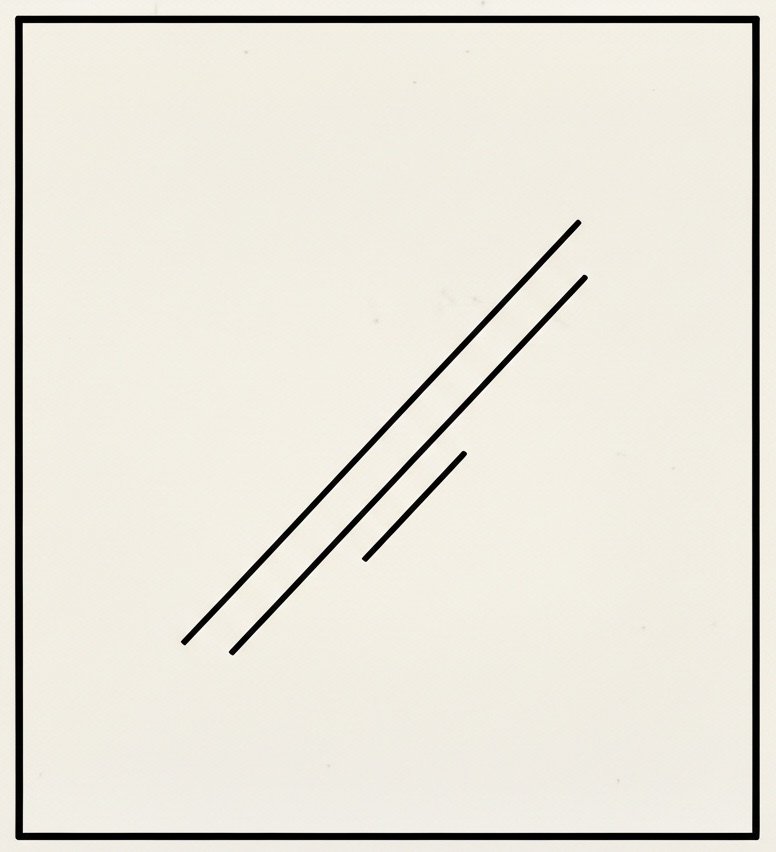
Lines or elements move diagonally across the canvas, creating energy and motion. Diagonals can lead the eye or suggest action.
Best for: Action scenes, dynamic landscapes, abstract art
Why it works: It adds tension and movement
Circular or Spiral Composition
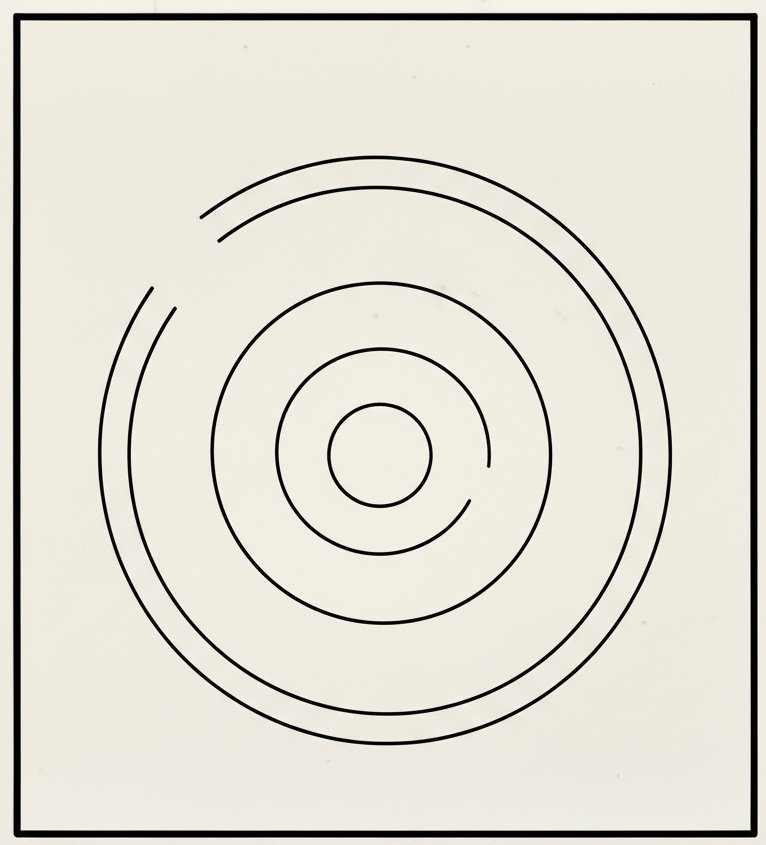
The viewer’s eye follows a circular or spiral path through the artwork. This can be subtle or overt, depending on the subject.
Best for: Narrative art, surrealism, symbolic work
Why it works: It keeps the viewer engaged in a continuous loop
Framing Composition
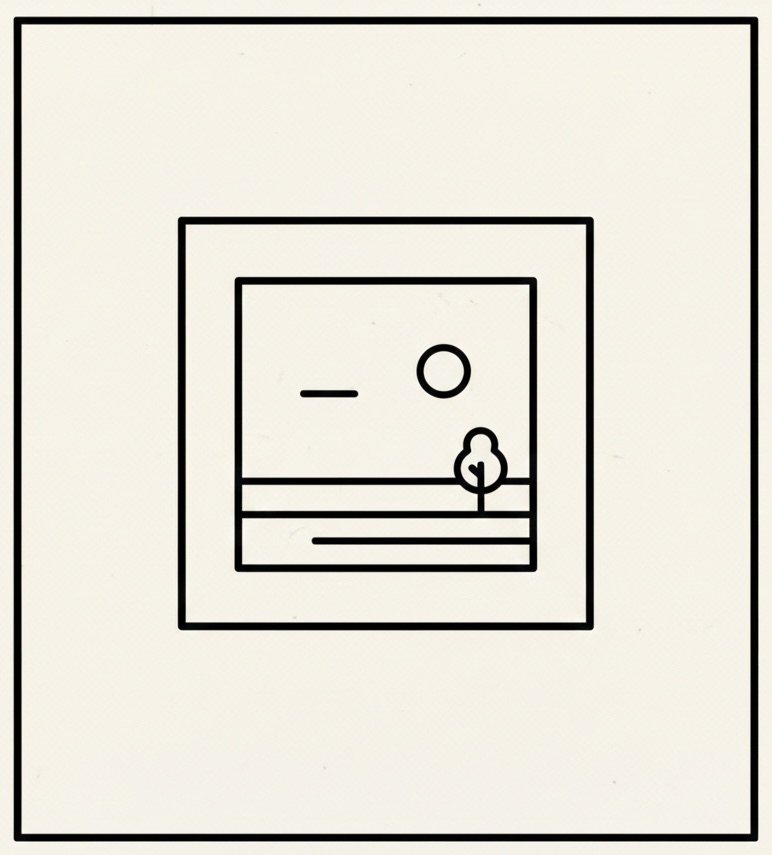
Use elements within the artwork to frame the subject—like a window, arch, or tree branches. This draws attention and adds depth.
Best for: Photography, illustration, environmental scenes
Why it works: It isolates the subject and adds context
Golden Ratio
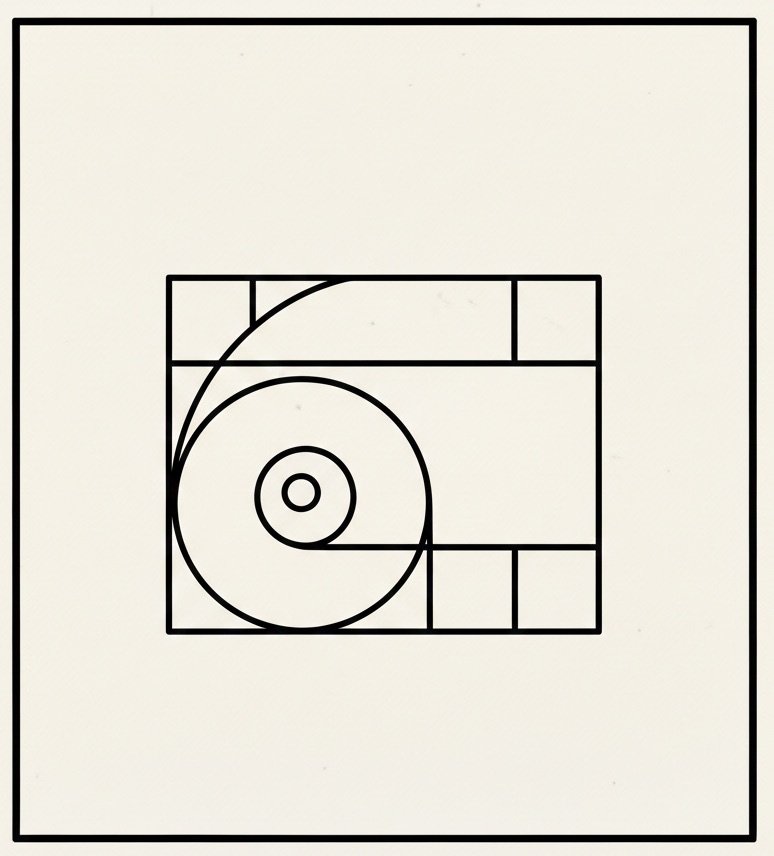
A mathematical ratio (approximately 1:1.618) used to create aesthetically pleasing proportions. The spiral derived from this ratio can guide composition layout.
Best for: Fine art, architecture, design
Why it works: It’s naturally pleasing to the human eye
Overlapping and Layered Composition
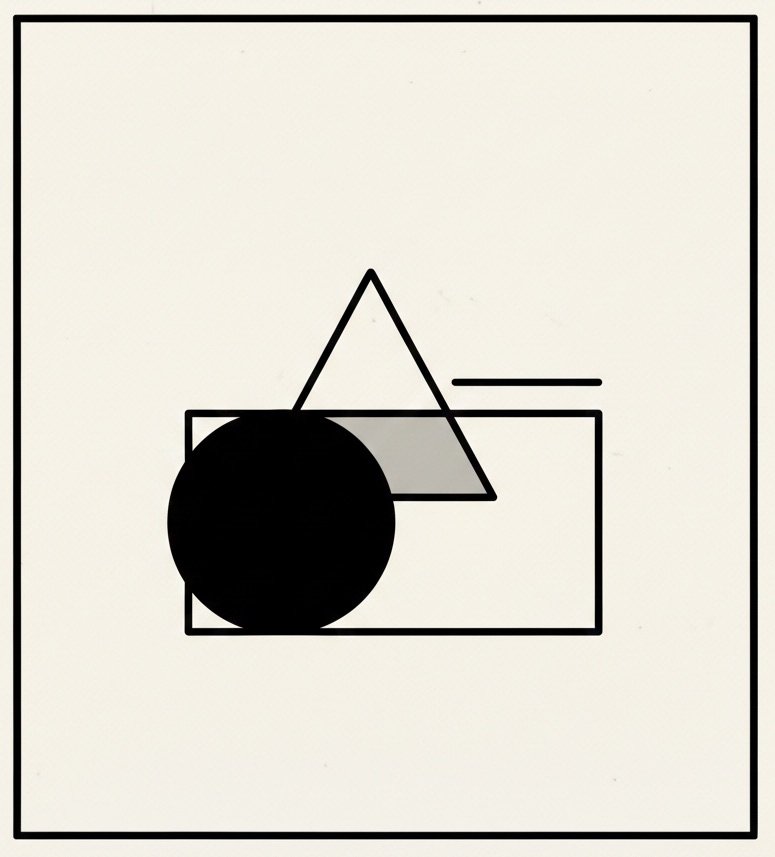
Placing elements in front of or behind each other creates depth and spatial relationships.
Best for: Collage, mixed media, storytelling
Why it works: It adds dimension and narrative complexity
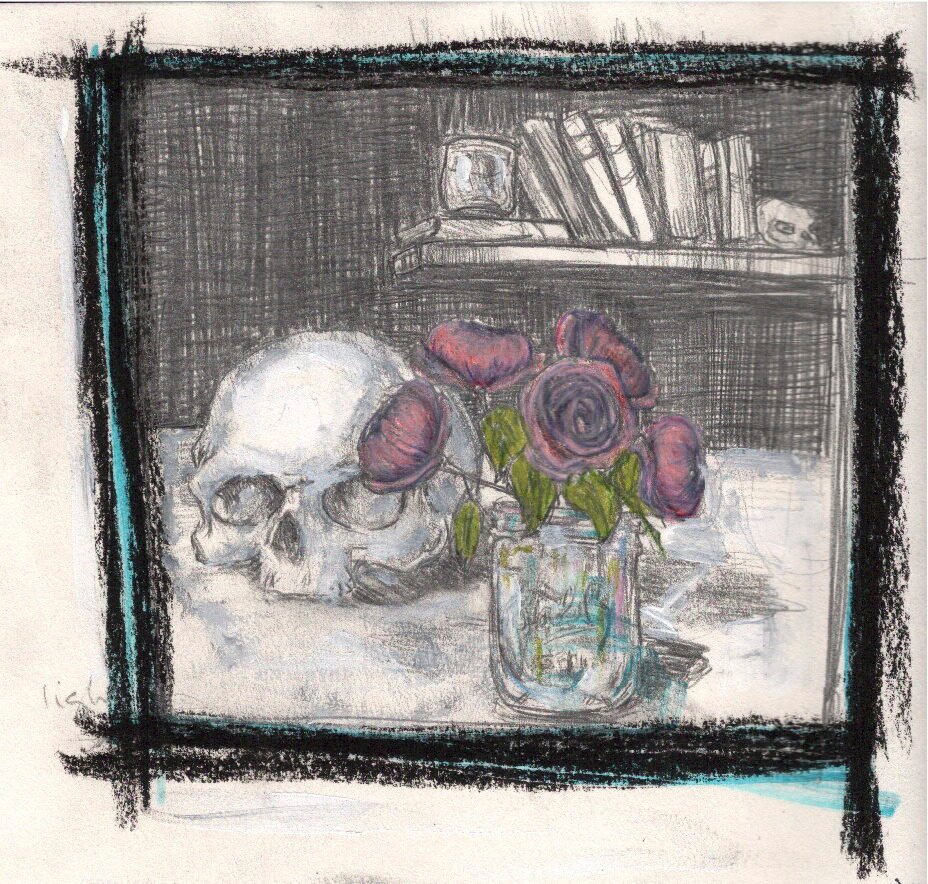
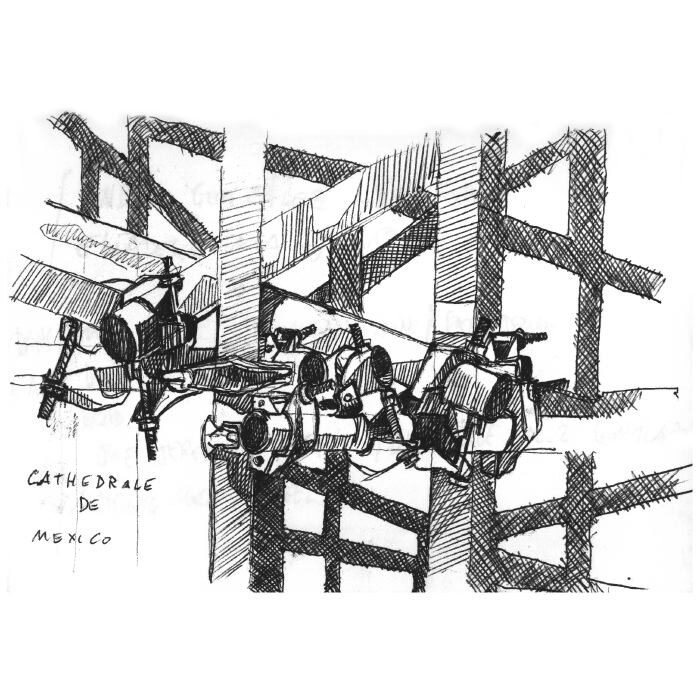
How to Choose the Right Composition
Start with Your Message
Every composition begins with intention. Ask yourself: What emotion or story am I trying to convey? If the goal is serenity, you might lean toward symmetry and balance. If the goal is tension or energy, diagonals and asymmetry may serve better. Defining the message first ensures that every visual choice supports the narrative rather than distracting from it.
Sketch Thumbnails
Before committing to a final layout, create small thumbnail sketches. These quick studies allow you to test multiple arrangements without investing significant time. By comparing thumbnails side by side, you can evaluate which composition best communicates your idea. This process also encourages experimentation, helping you discover unexpected solutions.
Consider Your Medium
Different mediums lend themselves to different compositional strategies. Photography often benefits from the rule of thirds or leading lines, while painting may emphasize color harmony and brushstroke rhythm. Digital design might prioritize grid systems and typography placement. By tailoring composition to the medium, you maximize its strengths and avoid forcing techniques that don’t fit.
Use Your Sketchbook
Your sketchbook is a laboratory for composition. Experiment with overlapping shapes, varied focal points, or unconventional framing. Analyze what feels natural and what feels forced. Over time, your sketchbook becomes a record of compositional experiments, offering insights into your evolving style and preferences.
Trust Your Instincts
Composition rules are guides, not laws. While frameworks like symmetry, balance, or the golden ratio can be helpful, they should never limit your vision. If breaking a rule enhances your message, embrace it. Trusting your instincts allows your work to remain authentic, ensuring that your composition reflects your unique artistic voice.

 Sketchbooks.org | MODERN AESTHETICS
Exploring Collage and Clippings | Fresh Sketchbook Inspiration
Why Embrace Collage and Mixed Media in Your Sketchbook? Your sketchbook is more than just a collection of drawings—it's a space for Exploring Collage, unleash creativity, and express your artistic journey. Sometimes, your sketchbook takes...
Frequently Asked Questions
What are the main types of composition in art?
Common types include rule of thirds, symmetry, asymmetry, radial, diagonal, and triangular compositions.
Why is composition important in visual art?
It guides the viewer’s eye, creates balance, and enhances the emotional impact of the artwork.
How do I know which composition to use?
Choose based on your subject, message, and the feeling you want to evoke.
Can I mix different types of composition?
Yes, combining techniques can create more complex and engaging visuals.
Is the rule of thirds always necessary?
No, it’s a helpful guide, but many powerful artworks break this rule intentionally.
What’s the difference between symmetrical and asymmetrical composition?
Symmetrical is mirrored and balanced; asymmetrical is balanced through contrast and visual weight.
How does composition affect storytelling in art?
It controls pacing, focus, and emotional tone, much like a director frames a scene in film.
Final Thoughts
Mastering the types of composition in art is like learning the grammar of visual language. It empowers you to communicate more clearly, evoke deeper emotions, and create work that resonates. Whether you’re sketching in a notebook or planning a large-scale painting, composition is your silent partner—shaping every decision and guiding every viewer.
So explore, experiment, and trust your eye. The more you understand composition, the more confidently you can bend it to your will—and make your art not just seen, but felt.
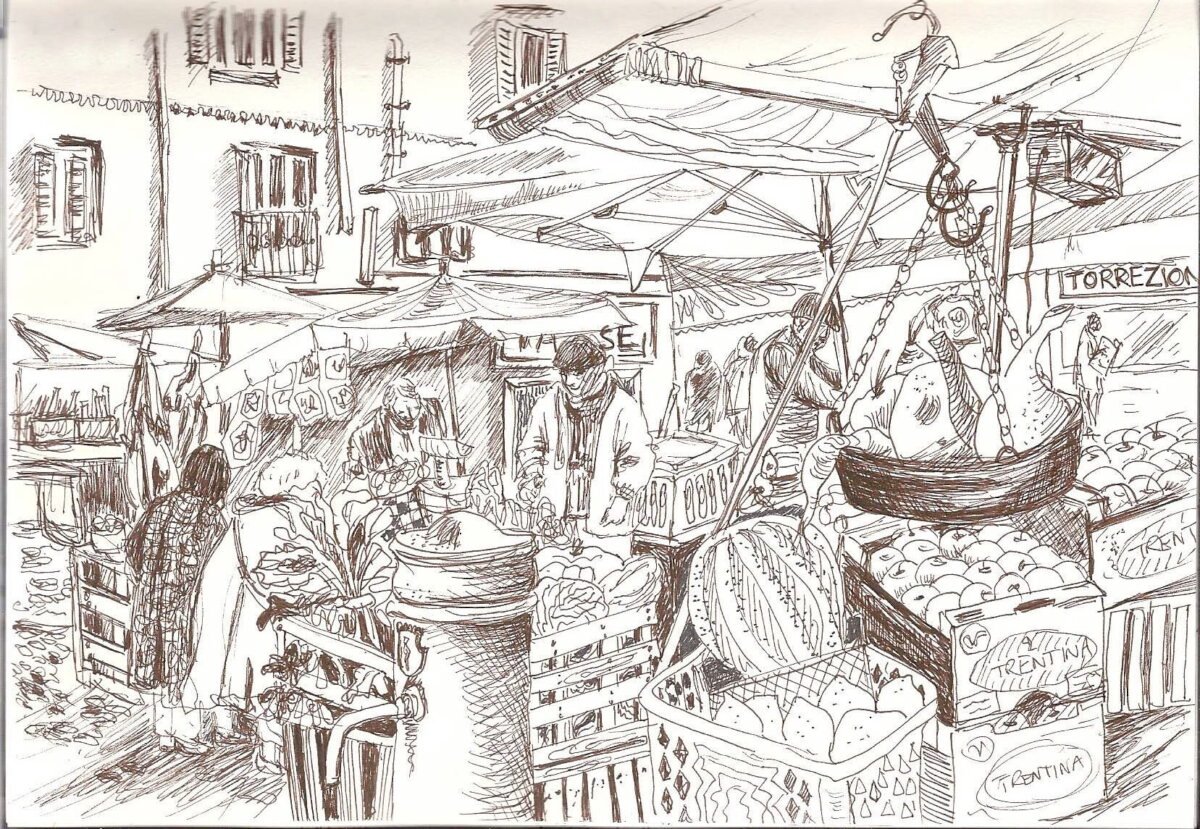
credit: AZZDOODLE
Ready to Share Your Work?
What role does color play in your sketchbook practice?

This article made me stop scrolling and grab my sketchbook. Thank you!
Clear, friendly, not overwhelming. I actually *wanted* to try it these out.
Game-changing.